
Research News
Decoding the "Terroir" of Essential Oils: A Natural Symphony of Origin and Time
Explore how geographic environmental differences and changes in harvest timing act like invisible codes to reshape and determine the scent and soul of a drop of TCM essential oil.

The ancients said: "An orange grown south of the Huai River is an orange, but grown north of the river, it becomes a trifoliate orange." This age-old agricultural proverb speaks to the profound impact of the environment on plant growth. When we talk about a bottle of high-quality TCM essential oil, besides advanced extraction processes, we cannot ignore the origin that gives the plant its mysterious fragrance—the "Secret Code of Terroir."
Why is it that the same peppermint can smell piercingly cool in some cases and mildly sweet in others? Why does the analgesic effect of Angelica root essential oil vary drastically when harvested in different seasons?
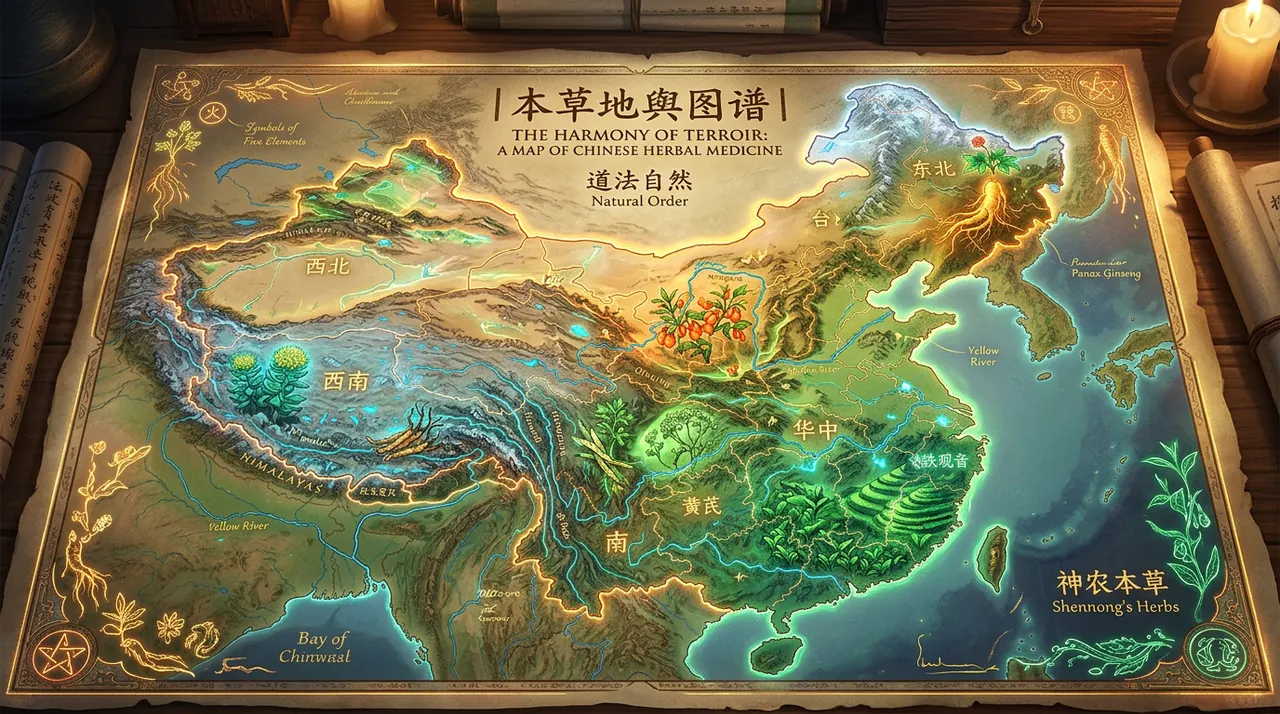
TCM essential oils are "secondary metabolites" synthesized by plants in specific growing environments to adapt to the climate and ward off pests and diseases. Therefore, "origin" becomes the first code that determines the soul of the essential oil. Different sunlight durations, soil pH levels, diurnal temperature variations, and altitudes act like a set of highly precise natural codes that directly rewrite the enzyme activity within the plant.
Take Patchouli as an example. Grown in the humid climate of Lingnan, Patchouli synthesizes a large amount of patchouli alcohol—which has strong antibacterial and dampness-resolving effects—to resist fungal infections. However, patchouli introduced to other regions, lacking this specific survival pressure, will see a sharp decrease in the core active ingredients of its volatile oil. This is the core reason why Traditional Chinese Medicine has always insisted on using "geo-authentic herbs" (Daodi Yaocai).
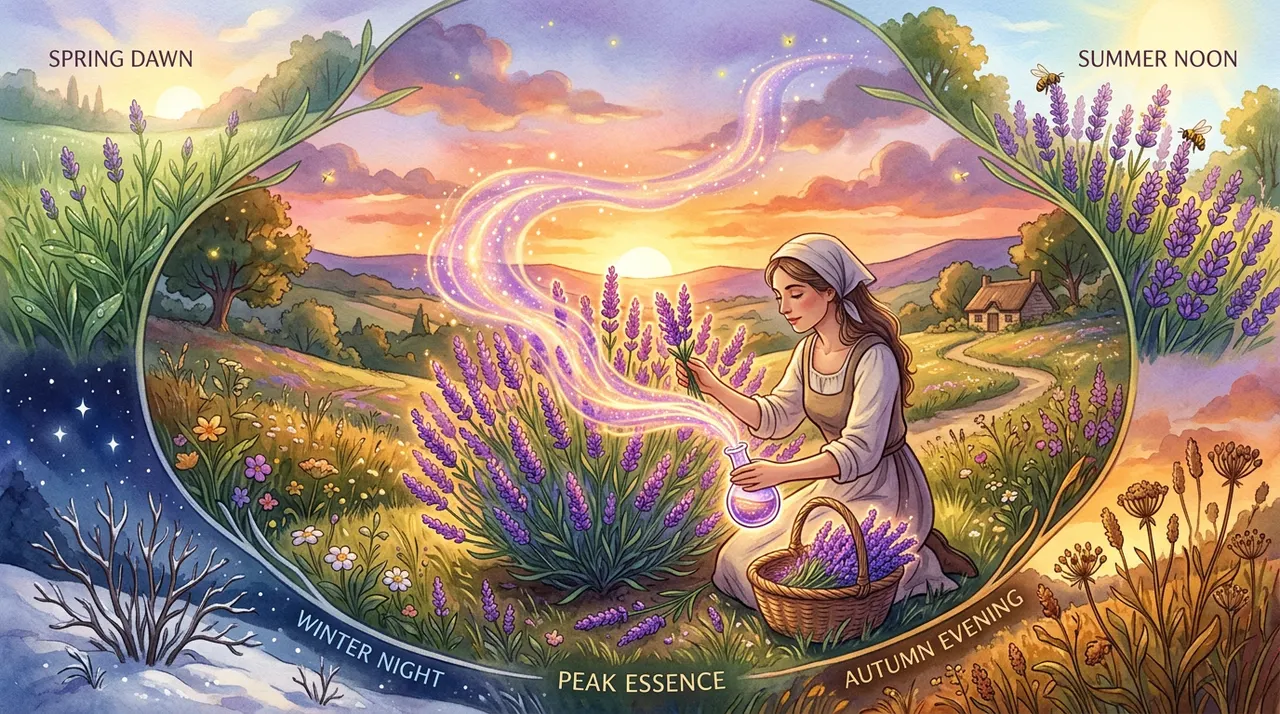
Beyond the span of space, the passage of time is also key to unlocking the essential oil code. A plant's physiological rhythms change dramatically throughout the four seasons, and even across the hours of a single day.
For instance, for plants whose medicinal parts are flowers (like rose or honeysuckle), the volatile oil content usually peaks when the flower is in bud or in the early morning before the dew has dried. With the shining sun and rising temperatures, large amounts of precious aromatic molecules will evaporate into the air. Conversely, for plants whose roots and rhizomes are used, it is often necessary to wait until late autumn or early winter when the above-ground parts wither, and the nutrients and essences are deeply stored underground. If harvested blindly without regard to the plant's biological clock, what you get might just be an empty shell lacking a "soul."
Every drop of precious TCM essential oil is the perfect crystallization of the earth (origin), solar terms (harvest time), and the plant's vitality. Decoding these natural codes not only helps us obtain essential oils of the purest quality and outstanding efficacy but also represents humanity's deepest reverence for and compliance with the rhythms of nature.
Reference PDF for study; cite the published version.
> Reference: > LI Cong, HUANG Shi-yu, CHEN Li-hua, et al. Analysis on the difference of volatile Oil components in traditional Chinese Medicine by location, Origin and harvesting time of traditional Chinese Medicine[J]. Chinese Traditional and Herbal Drugs, 2020, 51(20): 5395-5404.