
Research News
The Aromatic Map in the Chinese Pharmacopoeia: How Terroir Sculpts Essential Oil Quality?
Taking inventory of nearly 200 aromatic TCMs in the pharmacopoeia, exploring how plant genetics, terroir, harvest season, and extraction techniques become the core codes determining the efficacy and quality of essential oils.

As the "supreme code" of the national pharmaceutical field, the Chinese Pharmacopoeia records thousands of precious herbs that safeguard the health of the Chinese people. If you carefully browse the 2015 edition of the Chinese Pharmacopoeia, you will find an interesting phenomenon: there are nearly 200 traditional Chinese medicines containing volatile oil (essential oil) components, covering major functional categories from relieving the exterior and regulating Qi to clearing heat and invigorating blood.
These aromatic traditional Chinese medicines act like a "scent map" hidden in hefty classics, not only outlining the vast territory of "aromatic healing" in TCM over thousands of years but also posing a rigorous question to modern science: How can we ensure that these delicate fragrances remain pure and effective from the fields to the patients' mouths?
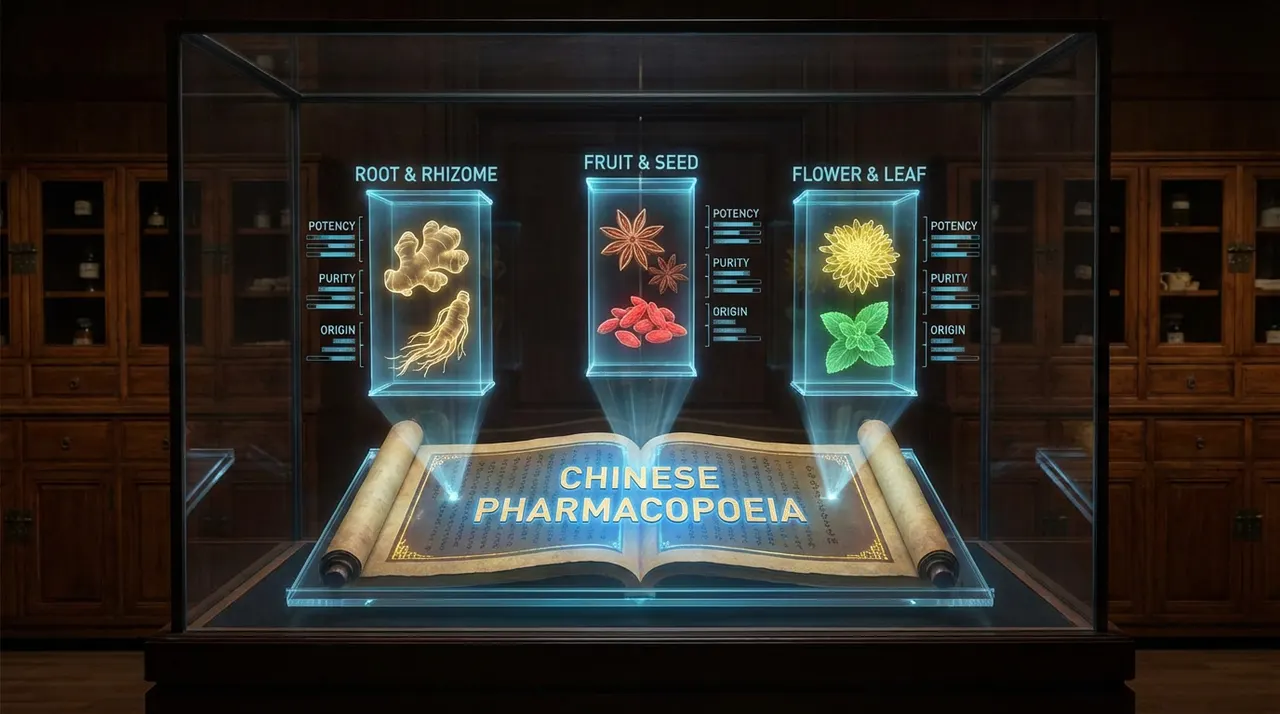
Among the volatile oil-containing TCMs included in the pharmacopoeia, their sources are incredibly diverse. Some are frequent guests on our dining tables, such as ginger, Sichuan peppercorn, and star anise; others are precious medicinal materials like Angelica, Ligusticum chuanxiong, and Dalbergia odorifera. Some are taken from flowers and leaves (with a light and lifting scent, mostly used to relieve the exterior and dispel pathogens), while others are taken from roots and rhizomes (with a heavy and thick scent, mostly used to warm the interior and invigorate blood).
However, essential oil is one of the most sensitive and variable substances in nature. The actual efficacy of the word "Peppermint" written in the pharmacopoeia may vary drastically due to various external factors.
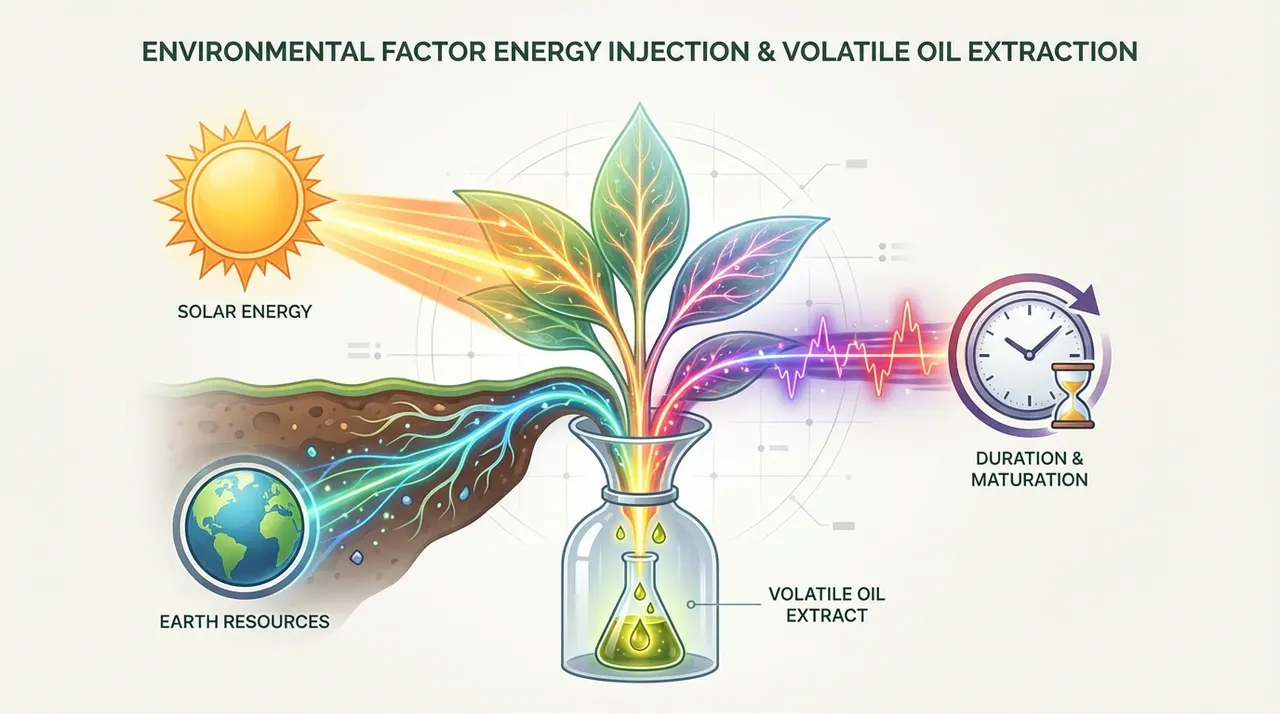
What determines the final quality of a bottle of TCM volatile oil is a relay race of heaven, earth, terroir, and craftsmanship. First are "genes and origin." The core components of the volatile oil of the same type of plant grown in different varieties or latitudes can even be completely different. The angle of sunlight and trace elements in the soil silently sculpt the chemical profile of the essential oil. Next is the "magic of time." Harvested in the morning or at dusk? During the spring blooming period or autumn leaf fall? The solar term of harvesting acts like the timing of pressing a camera shutter, determining the peak content of aromatic components in the plant. Finally, "processing and extraction." Ancient methods of stir-frying, baking, and steaming, as well as modern steam distillation or supercritical extraction, all cause subtle transformations of essential oil molecules under heat and pressure, thereby affecting the final efficacy.
The inclusion of aromatic TCM in the Chinese Pharmacopoeia is not only an affirmation of ancient experience but also a call to establish a scientific quality control system. Only by cracking these environmental and processing codes that affect quality can we allow classic scents to precisely exert their healing power under the ruler of modern medicine.
Reference PDF for study; cite the published version.
> Reference: > JIAO Jiao-jiao, WANG Ya-qi, XIONG You, et al. Classification of Chinese Medicines Containing Volatile Oil and Analysis of Quality Influencing Factors Based on Fist Part in Chinese Pharmacopoeia 2015 Edition[J]. Chinese Journal of Experimental Traditional Medical Formulae, 2019, 25(9): 197-206.