
popular-science
The Alchemy of Honey Bran and Honey Chaff: How Traditional Processing Reshapes the Volatile Components of Cimicifuga
The "Paozhi" (processing) of TCM is an ancient chemical art. The Jiangxi characteristic honey bran and honey chaff stir-frying methods can drastically alter the composition of Cimicifuga's volatile oil, making its medicinal properties milder and more precise.

As its name suggests in Chinese, "Shengma" (Cimicifugae Rhizoma) is a TCM herb capable of "raising and lifting Yang Qi," often used to treat prolapse of the rectum or uterus caused by Qi deficiency sinking. However, the medicinal property of raw Shengma is relatively "fierce." If used directly, there is a risk of excessive dispersion.
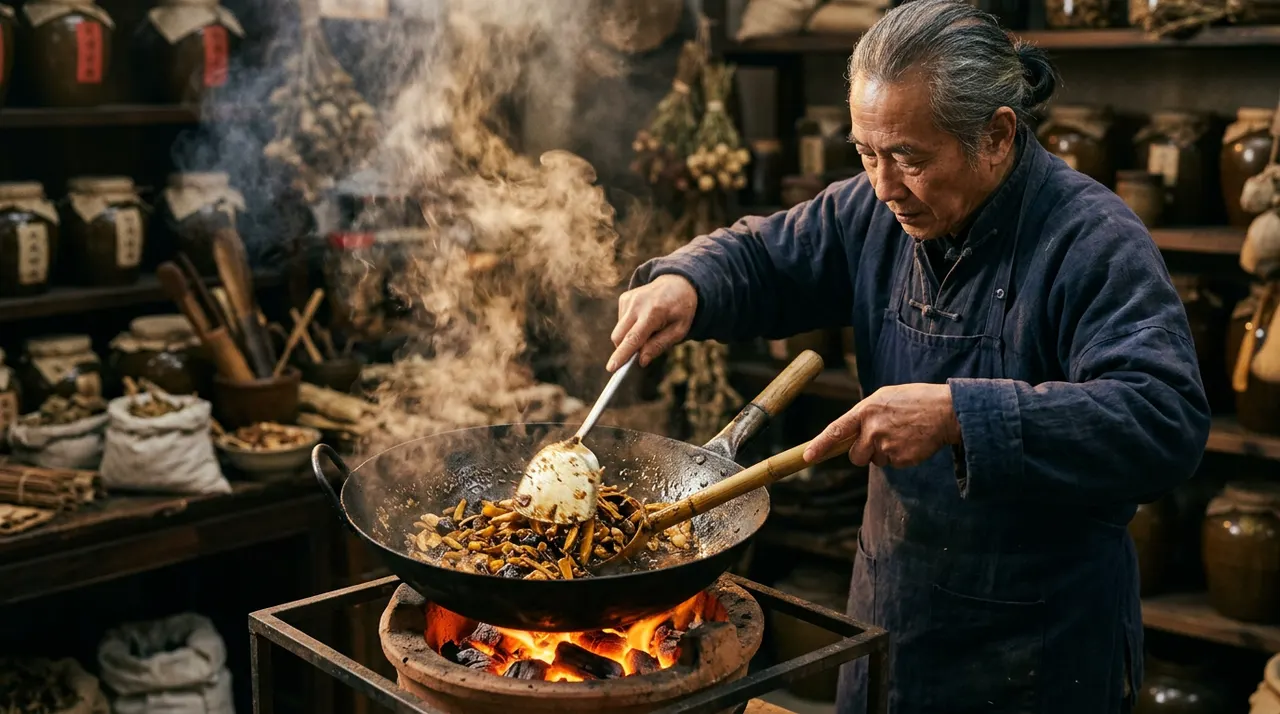
To tame this wild horse, generations of TCM practitioners invented rich "Paozhi" (processing) techniques. Among them, the Jiangxi TCM processing schools (Zhangbang and Jianchangbang) created unique local processes: honey bran stir-frying and honey chaff stir-frying. When Shengma meets sweet honey, wheat bran, and rice chaff and is stir-fried in a hot wok, a wonderful chemical alchemy quietly unfolds.
Reshaping the Microscopic World of Volatile Oils
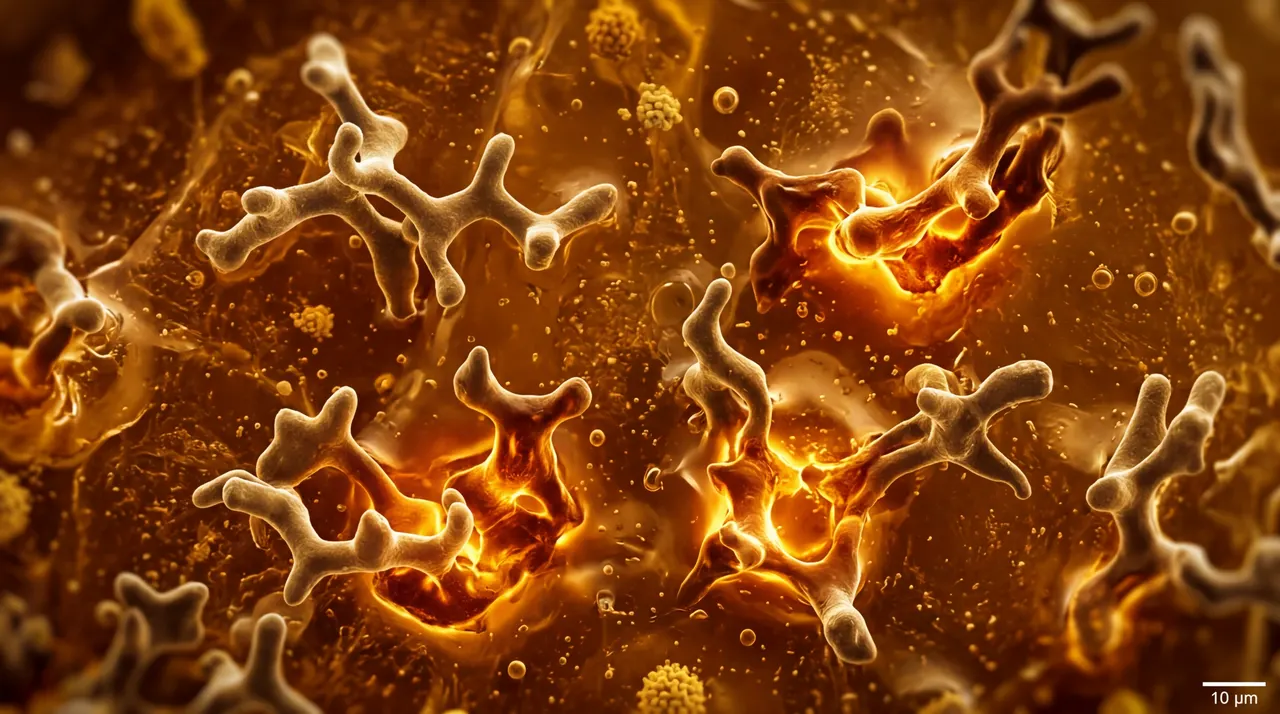
The change in aroma during the processing of herbs often implies drastic changes in internal volatile oil components. To explore exactly what honey bran and honey chaff stir-frying alters, researchers used gas chromatography-mass spectrometry (GC-MS) to comparatively analyze the volatile oils of raw Shengma and its different processed products.
The data displayed a shocking reshaping process. Raw Shengma contains 73 volatile components. After honey bran stir-frying, the number of components sharply decreased to 37; but after honey chaff stir-frying, the number surged to 93! This indicates that the addition of excipients (bran, chaff, honey) and high temperature is not merely "heating" but triggers extremely complex oxidation, volatilization, decomposition, and polymerization reactions.
Chemical Evidence for Toxicity Reduction and Efficacy Enhancement
By deeply analyzing the content changes of those common components, we can better appreciate the wisdom of processing.
The study found that the relative mass fractions of some common components with high content in raw materials mostly showed an upward trend after "honey bran stir-frying." Wheat bran has the effect of harmonizing the middle and benefiting the stomach, and honey can moisten dryness and detoxify. High-temperature stir-frying removes some easily volatile irritating substances in Shengma while concentrating and enriching effective components that help invigorate the spleen and replenish Qi. Thus, the medicinal properties of Shengma become milder (moderating its pungent and dispersing nature), making it more suitable for lifting treatments in patients with weak constitutions.
Meanwhile, "honey chaff stir-frying" makes the composition of the volatile oil more complex and diverse. The large amount of new substances generated may endow the herb with new therapeutic inclinations.
Pharmaceutical Technology Inherited for a Millennium
The Jiangxi characteristic processing technology is by no means simple "cooking"; it is a precise materials science. By accurately controlling the heat, cleverly using wheat bran and chaff as heat conduction and adsorption media, supplemented by the chemical penetration of honey, the ancients successfully targeted the elimination and reshaping of active molecules inside Shengma.
This research provides solid modern chemical evidence for "why the same herb can have vastly different efficacies after processing." It also allows the intangible cultural heritage of Jiangxi school TCM processing to shine with a more rational brilliance under the spotlight of modern science.
Reference PDF for study; cite the published version.