
popular-science
Chemical Magic in the TCM Wok: What Exactly Do Bran Stir-Frying and Honey Roasting Do to Zhiqiao?
Zhiqiao must be high-temp "processed" before medical use. Scientists found via GC-MS that adding wheat bran and honey not only removes irritating components but creates up to 77 entirely new chemicals through high-temp reactions!

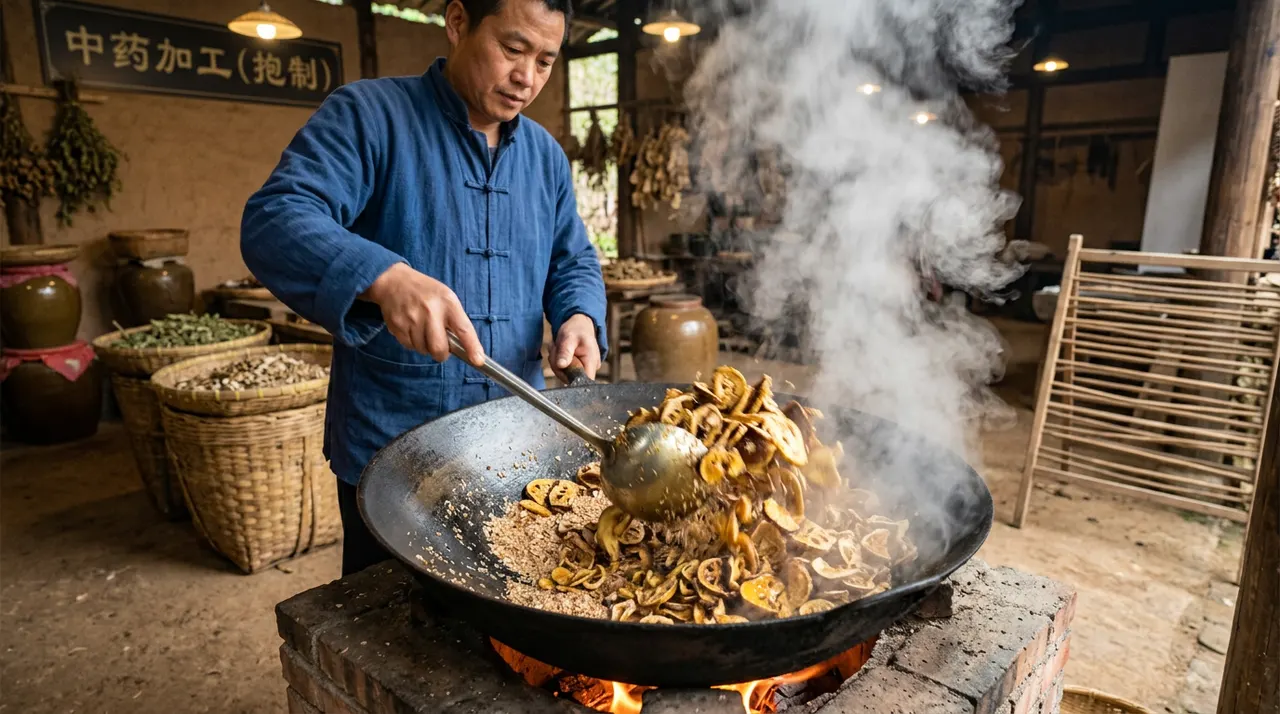
When getting prescriptions at a TCM pharmacy, you often see terms like "plain stir-fried," "bran stir-fried," or "honey roasted" on the herb names. This process of putting raw herbs into a large wok and repeatedly stir-frying them with wheat bran or honey is called "Paozhi" (Processing) in TCM.
Take the famous Qi-regulating herb Zhiqiao (Aurantii Fructus), a specialty of Jiangxi, as an example. Experienced TCM doctors often say: consuming raw Zhiqiao is too harsh and hurts the stomach; after bran stir-frying, its nature becomes mild, and honey roasting can moisten the lungs. But what exactly is the scientific principle behind this? What magic do the high temperatures and auxiliaries in the wok cast on the molecules inside Zhiqiao?
A Molecular Showdown of 181 Compounds
To uncover the chemical truth of processing, researchers sent raw Zhiqiao, plain stir-fried, bran stir-fried, honey-bran stir-fried, and honey-chaff stir-fried samples all into the lab. They extracted the volatile oils from all samples and conducted a dead-end-free component fluoroscopy using an extremely sensitive GC-MS (Gas Chromatography-Mass Spectrometer).
The data was shocking: the instrument identified a staggering total of 181 chemical components from these plates of stir-fried Zhiqiao! Compared to raw Zhiqiao, the volatile oils after processing underwent earth-shaking changes.
"New Substances" Out of Thin Air
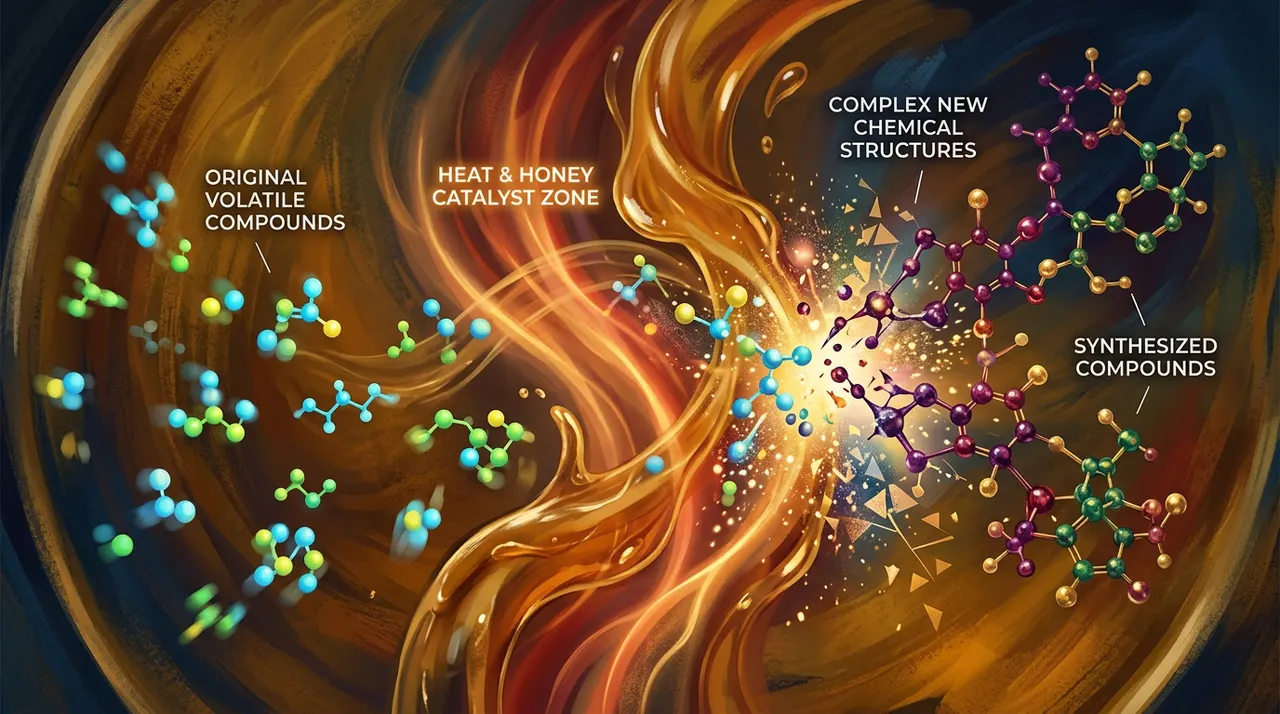
The most shocking discovery was that processing is not just "baking dry" part of the original volatile oil (like limonene); it acts more like an extremely complex high-temperature chemical reactor.
Data showed that at high temperatures, the original components of Zhiqiao magically fused and recombined with the auxiliaries (wheat bran, honey). - In bran stir-fried Zhiqiao, 38 new compounds that absolutely did not exist in the raw product were born out of thin air! - In the most complex honey-bran stir-fried Zhiqiao, because the complex sugars of honey participated in the reaction, it miraculously gave birth to a staggering 77 completely new chemical substances!
These newly generated substances (like some large-molecule esters and ketones) not only greatly changed the odor of the herb but are highly likely the core reason why the drug efficacy becomes "mild and lasting" after processing.
Alchemy Inherited for Millennia
This extremely hardcore research vindicates the millennia-old "Paozhi technology" of TCM using modern chromatographic data.
It eloquently proves: TCM processing is absolutely not just simply cooking the herbs. The wheat bran and honey added to the wok are extremely brilliant "chemical catalysts." Through a series of complex thermal transformations, they precisely remove the toxic and harsh nature of the herbs and synthesize new therapeutic molecules that are friendlier to the human body. The wisdom of the ancients still shines brilliantly under the microscope of modern science.
Reference PDF for study; cite the published version.