
popular-science
Natural Wall-Breakers of the Skin Barrier: Frankincense and Myrrh Essential Oils Escort Macromolecular Drugs Across the Border
Faced with extremely hard-to-absorb alkaloid drugs, volatile oils extracted from Frankincense and Myrrh cleverly disrupt the lipid structure of the stratum corneum, becoming highly efficient and safe natural penetration enhancers.

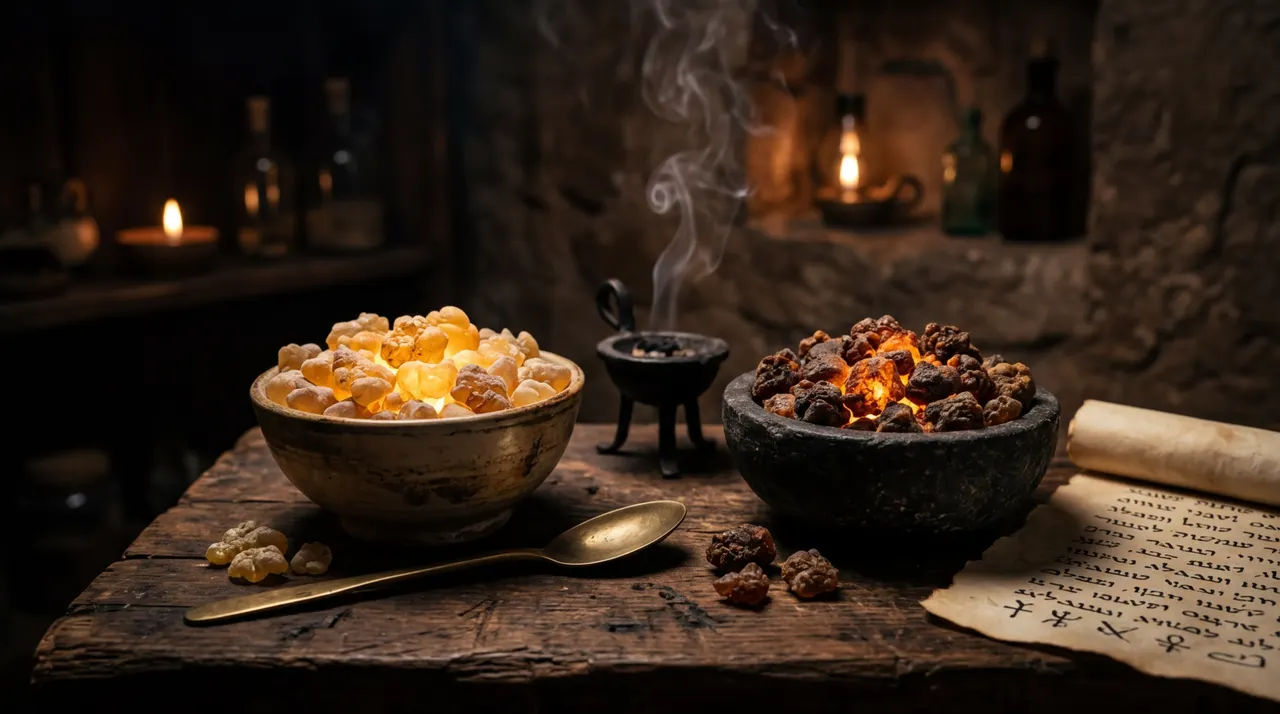
In the research and development of transdermal drug delivery (patches, ointments), how to make active ingredients smoothly penetrate the human body's most robust "wall"—the stratum corneum of the skin—has always been a headache. Many large-molecule drugs are often kept out, unable to penetrate deeply to exert therapeutic effects. However, in nature's spice library, the ancient resins Frankincense and Myrrh, through their extracted volatile oils, are playing the role of perfect "wall-breaking pioneers."
Alkaloid components (such as brucine, strychnine, ephedrine, etc.) are extremely important but notoriously difficult to absorb transdermally in TCM. To escort these "VIPs" across the border, researchers used the classic prescription "Jiufen Powder" as a model to test the penetration-enhancing power of Frankincense and Myrrh volatile oils. In in vitro transdermal experiments, a miracle occurred. Under the action of volatile oils, whether lipophilic brucine or water-soluble ephedrine hydrochloride, their skin permeation amount ushered in explosive growth, and the penetration enhancement effect was even comparable to the chemically synthesized strong penetration enhancer "Azone."
What magic did these volatile oils perform? Through GC-MS and principal component analysis, scientists caught the heroes behind the scenes: octyl acetate and 1-octanol in Frankincense, and germacrene in Myrrh. These amphiphilic natural aromatic molecules can extremely flexibly embed into the lipid bilayer of the stratum corneum, "disturbing" its originally dense structure and making it loose.
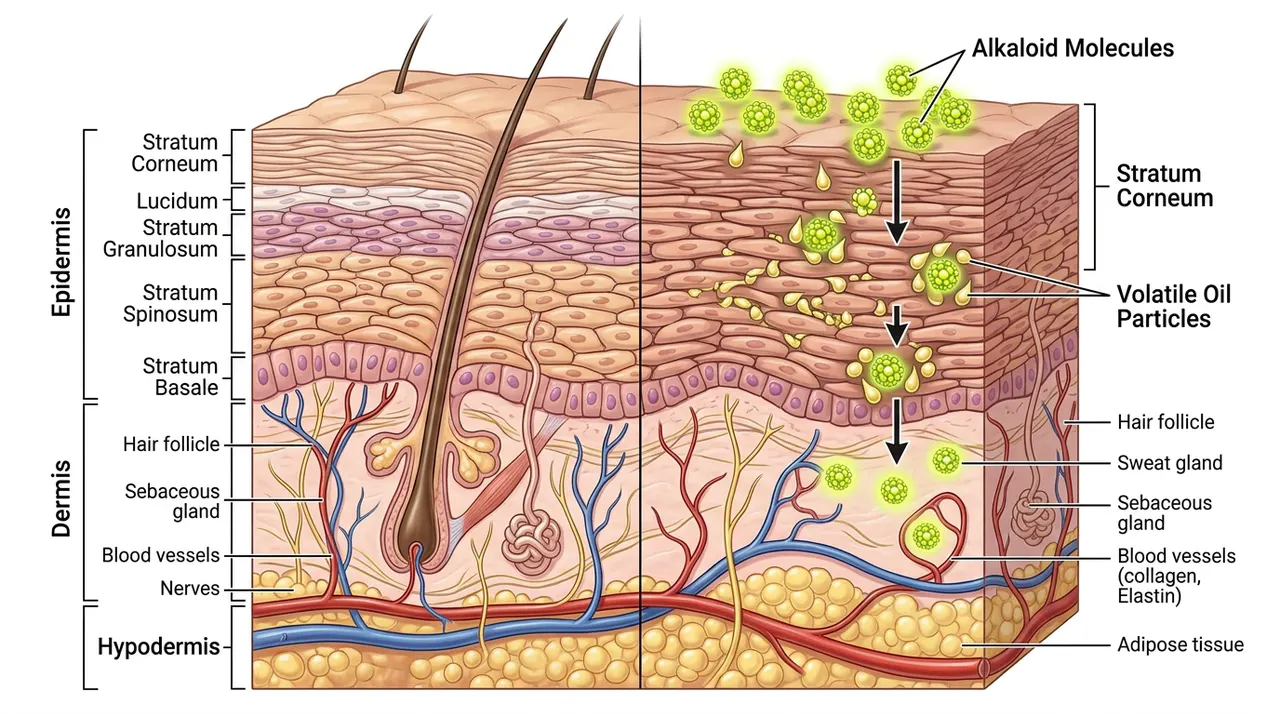
In this way, microscopic highways are quietly opened up inside the skin. Frankincense and Myrrh volatile oils are not only excellent natural penetration enhancers but, due to their inherent blood-activating and pain-relieving efficacies, can exert synergistic therapeutic effects while enhancing penetration. In this microscopic "wall-breaking operation," the ancient resins have opened a fragrant door for the innovation of modern topical preparations.
Reference PDF for study; cite the published version.