
popular-science
Refusing to "Burn" Herbs with High Heat: How Ethanol Fumigation Perfectly Saves the Efficacy of Angelica Powder?
Angelica powder must be sterilized before manufacturing, but traditional high-heat baking completely evaporates its precious volatile oil. Scientists optimized "ethanol sterilization," killing 99.59% of bacteria while perfectly locking in the essence.

Angelica sinensis (Danggui) is praised as the "number one medicine for nourishing blood." In the production of modern Chinese patent medicines (like various pills and powders), factories often directly use crushed "Angelica raw powder." However, root tubers dug from the herbal fields inevitably carry massive amounts of bacteria and fungi from the soil. To meet pharmaceutical hygiene standards, the Angelica powder must be ruthlessly sterilized before being made into pills.
The most common sterilization methods used by traditional pharmaceutical factories are simple and brutal: dry heat sterilization (baking in an oven at high temps) or moist heat sterilization (steaming in an autoclave). But for an aromatic herb like Angelica, which heavily relies on volatile oil (containing ligustilide) and heat-sensitive substances (ferulic acid), this high-temperature operation is undoubtedly a disaster.
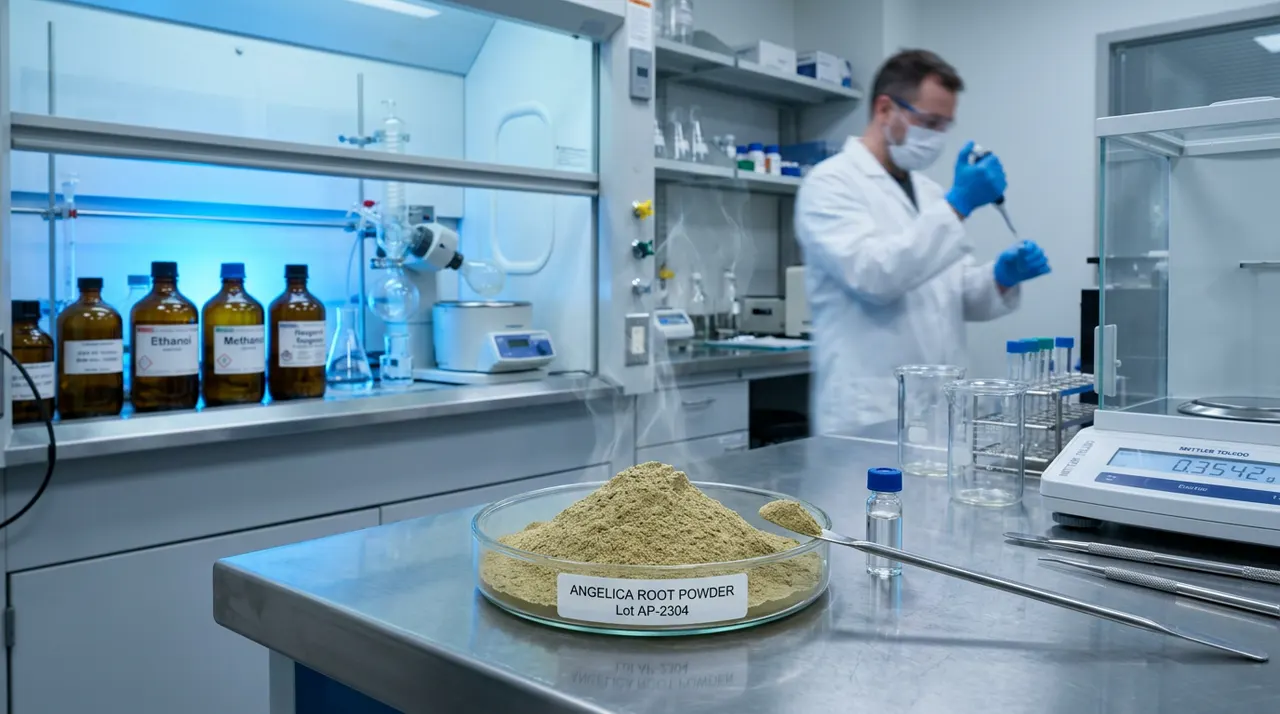
The Tragic Cost of High-Temperature Sterilization
To clearly see the destruction of herbs by high temperatures, researchers conducted comparative tests. The data was horrifying: after dry heat sterilization (high-temperature baking), the volatile oil in the Angelica powder was 100% completely "baked dry" and evaporated, and the core cardiovascular-protecting component, ferulic acid, was completely destroyed! Even with the slightly milder moist heat sterilization, more than half of the volatile oil was lost (55.56%). The bacteria were killed, but so was the drug efficacy.
Ethanol Magic: A Cold-Blooded Killer and Gentle Guardian
To preserve the "soul" of Angelica, scientists introduced a weapon capable of mass destruction at normal temperatures: Ethanol (alcohol) gas sterilization.
Using response surface methodology, they meticulously designed the optimal formula for ethanol sterilization: using 80% concentration ethanol to conduct a brief, sealed fumigation on Angelica powder at a relatively lower temperature (78°C).
A miracle occurred: under this perfect process, the ethanol gas acted like an all-penetrating sword. It not only achieved a staggering 99.59% sterilization rate, steadily surpassing those brutal high-temperature methods; more excitingly, because prolonged high temperatures were avoided, the Angelica powder sterilized by ethanol had its volatile oil extraction rate increase by 94.44% compared to the untreated group (the penetrating effect of ethanol helped open plant cells), and the extremely delicate ferulic acid only lost a negligible 8%.
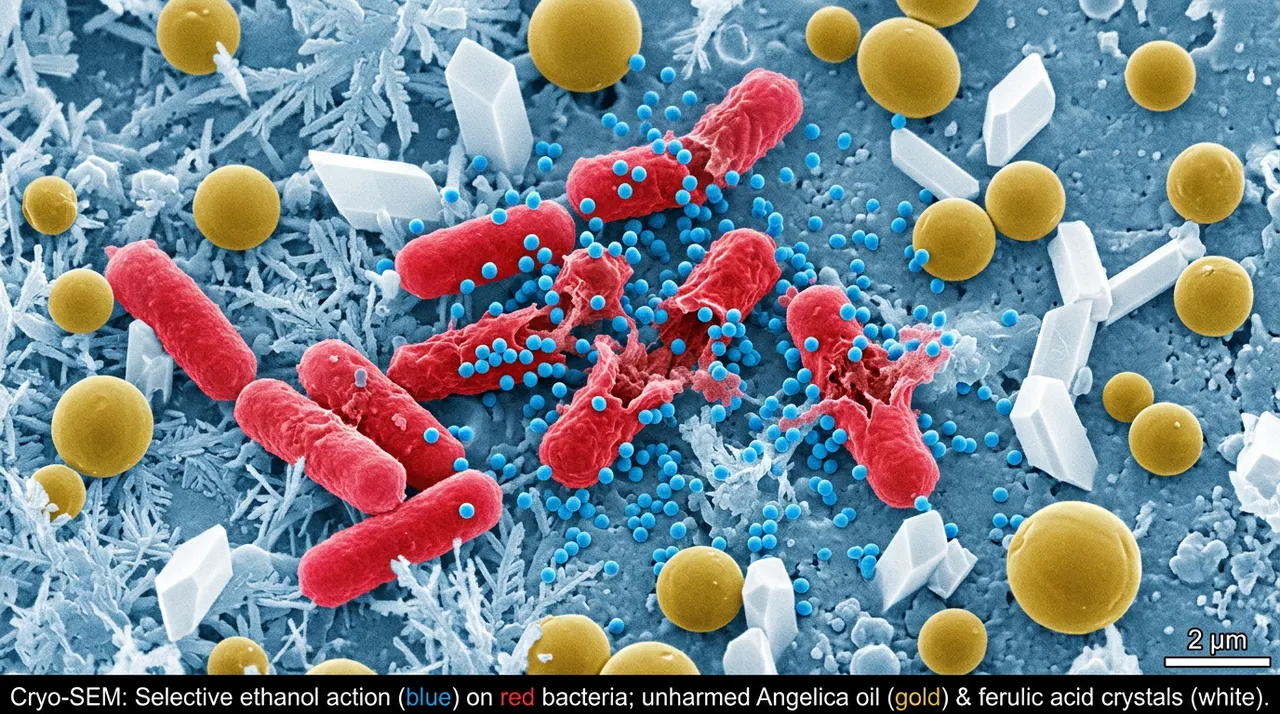
The Green Upgrade of Traditional Pharmaceutical Processes
This research sounds an alarm for TCM enterprises with extremely shocking data.
The "ethanol sterilization" process, which is low-energy and highly protective, proves that we can completely meet the strictest medical hygiene standards without sacrificing drug efficacy. This not only saves the charming medicinal aroma of Angelica powder but marks a comprehensive upgrade of traditional TCM initial processing towards a more scientific and refined direction.
Reference PDF for study; cite the published version.