
popular-science
A Warm, Spicy Defense Line: Exploring the Hardcore Bactericidal Power of Sichuan Cinnamon Volatile Oil
Up to 72% E-Cinnamaldehyde endows Sichuan cinnamon with a powerful soul. In the microscopic world, it transforms into "blazing fire," mercilessly dismantling multiple pathogens like Staphylococcus aureus.

On a cold winter day, a latte sprinkled with cinnamon powder always brings endless warmth. This spice, full of spicy and woody aromas, is not only a darling in the kitchen but also a potent medicine in TCM for dispelling cold and relieving pain. And when pure volatile oil is extracted from Cinnamomum cassia Presl produced in Sichuan, it reveals not just its fragrance, but a formidable bactericidal power.

Scientists dismantled the chemical secrets of Sichuan cinnamon volatile oil through precise GC-MS analysis. They found that it contains up to 72.54% "E-Cinnamaldehyde". This component, considered the soul of cinnamon, is precisely the core weapon endowing it with outstanding antibacterial activity.
In the microscopic battle against common pathogenic bacteria, cinnamon volatile oil demonstrated amazing combat power. Whether it's the troublesome Staphylococcus aureus, Escherichia coli causing gastroenteritis, or Pseudomonas aeruginosa leading to skin infections, cinnamon essential oil can act like a blazing fire, mercilessly breaking through their defense lines, and even has a significant inhibitory effect on certain fungi (such as Candida albicans).
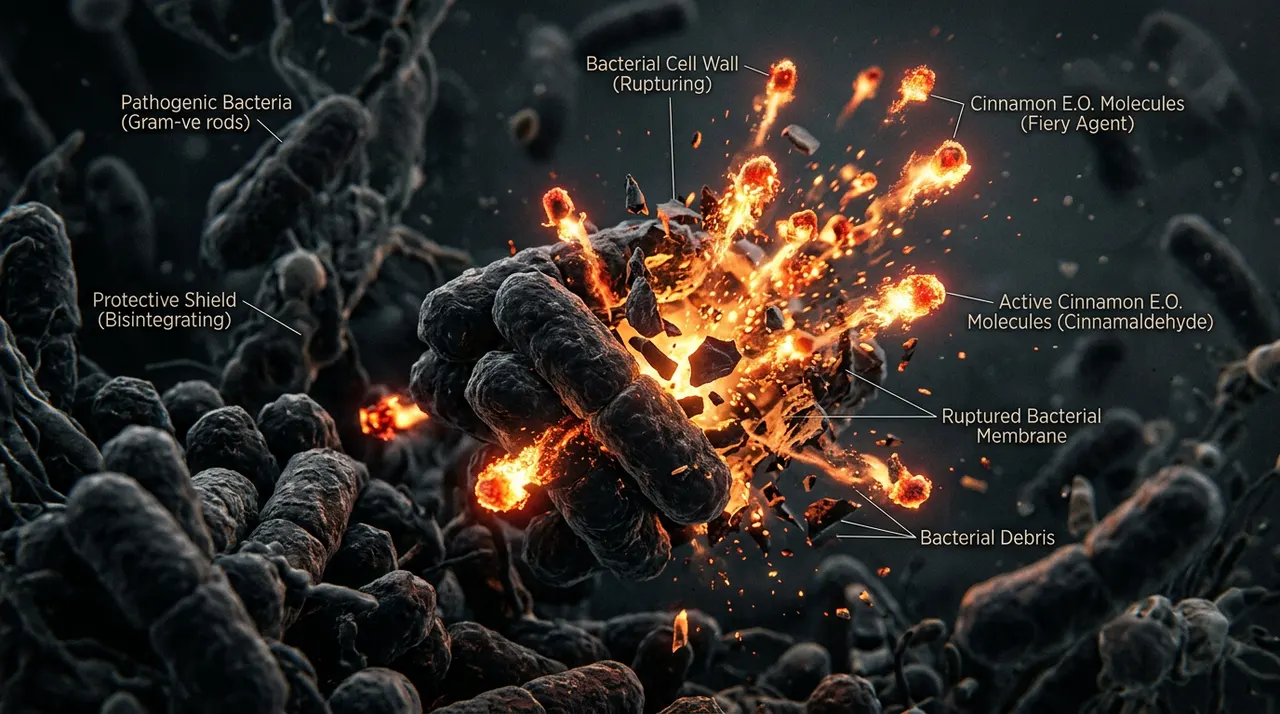
This discovery of cinnamon volatile oil provides a solid scientific basis for the development of natural broad-spectrum antibacterial agents. In an era where antibiotic abuse causes many hidden dangers, nature is providing us with a more natural and safe protective shield through this warm, spicy fragrance.
Reference PDF for study; cite the published version.