
popular-science
Locking Clove Oil with "Nano-Wood": The Magical Pickering Emulsion and Its Antibacterial Surge
Clove oil is potently antibacterial but volatile and water-insoluble. Scientists innovatively used wood-derived "cellulose nanocrystals" as solid particles to encapsulate clove oil into super-stable Pickering emulsions, surging its antibacterial efficacy.

Clove oil is one of nature's most formidable antibacterial agents and a star candidate for natural preservatives. But it has two fatal weaknesses: first, as an "oil," it absolutely cannot dissolve in aqueous food or medical systems; second, it is highly volatile, losing its aroma and efficacy over time.
The traditional approach is to add massive amounts of chemical "surfactants" to emulsify it (oil-in-water). But this not only poses safety risks but may cause allergies. To find an ultimately green, safe solution, scientists turned their eyes to trees—specifically, Cellulose Nanocrystals (CNCs) extracted from wood.
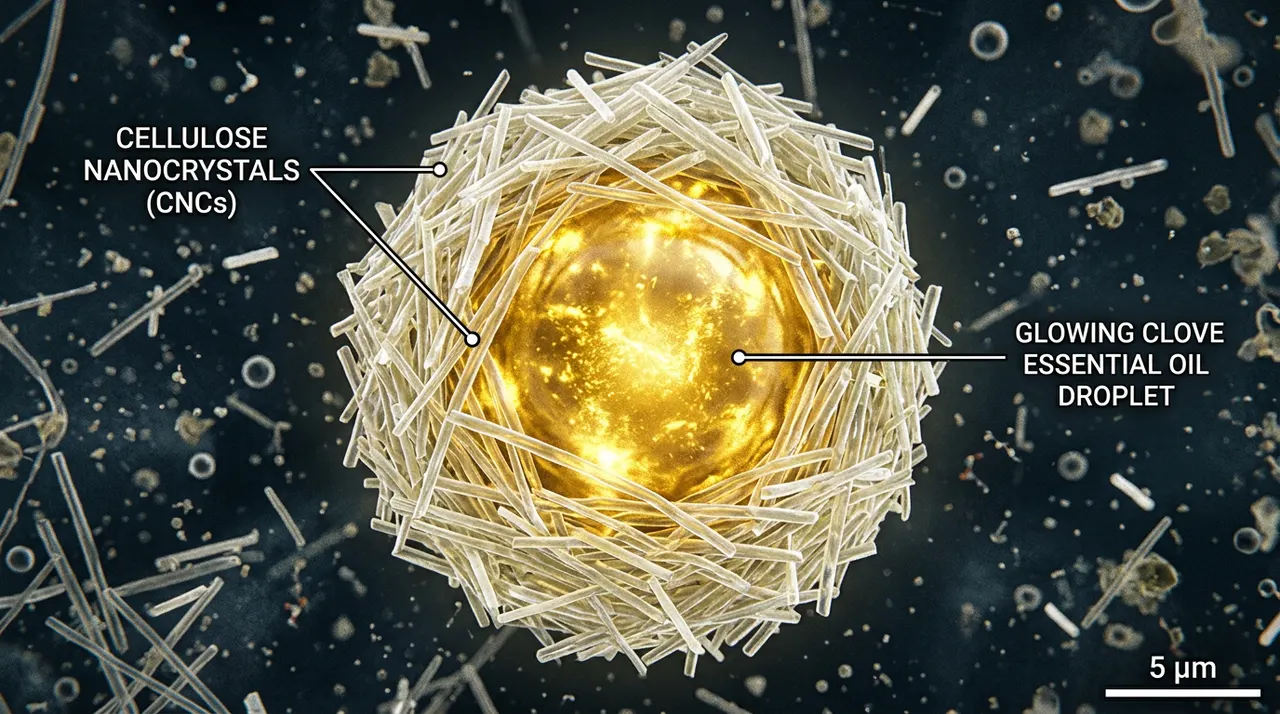
Pickering Emulsion: Physical Magic Without Chemicals
This research, published in an authoritative international biomacromolecule journal, demonstrated a cutting-edge black technology called "Pickering Emulsion."
Unlike traditionally using chemical soap-like emulsifiers, Pickering emulsions rely purely on extremely tiny "solid particles" to stabilize oil droplets. Scientists used the massive power of ultrasound to firmly "nail" the slender CNCs (nano-scale cellulose rods) right onto the interface between clove oil and water.
These rod-like nanocrystals wove an indestructible "physical armor" on the surface of the oil droplets. Experiments proved that this clove oil emulsion locked by CNCs is extremely stable; whether stored at room temperature for 30 days or subjected to harsh centrifugation tests, it shows no oil-water separation!
Joint Firepower Piercing Cell Membranes
Successfully dissolving the oil in water is only the first step. When facing bacteria, this "nano-armor" displayed terrifying lethality.
In tests against E. coli and Staphylococcus aureus, the CNC-stabilized clove oil Pickering emulsion had an antibacterial effect far exceeding that of untreated pure clove oil! Why? Microscopic mechanisms revealed that negatively charged CNCs with sharp morphologies can greatly increase the contact area between the essential oil and bacterial surfaces. Even more terrifying, CNCs themselves can act like tiny spears piercing the bacterial cell membrane, subsequently rapidly "injecting" the internally carried high-concentration clove essential oil into the bacteria, triggering massive leakage of bacterial internal substances (like nucleic acids and proteins), ultimately leading to complete bacterial death.
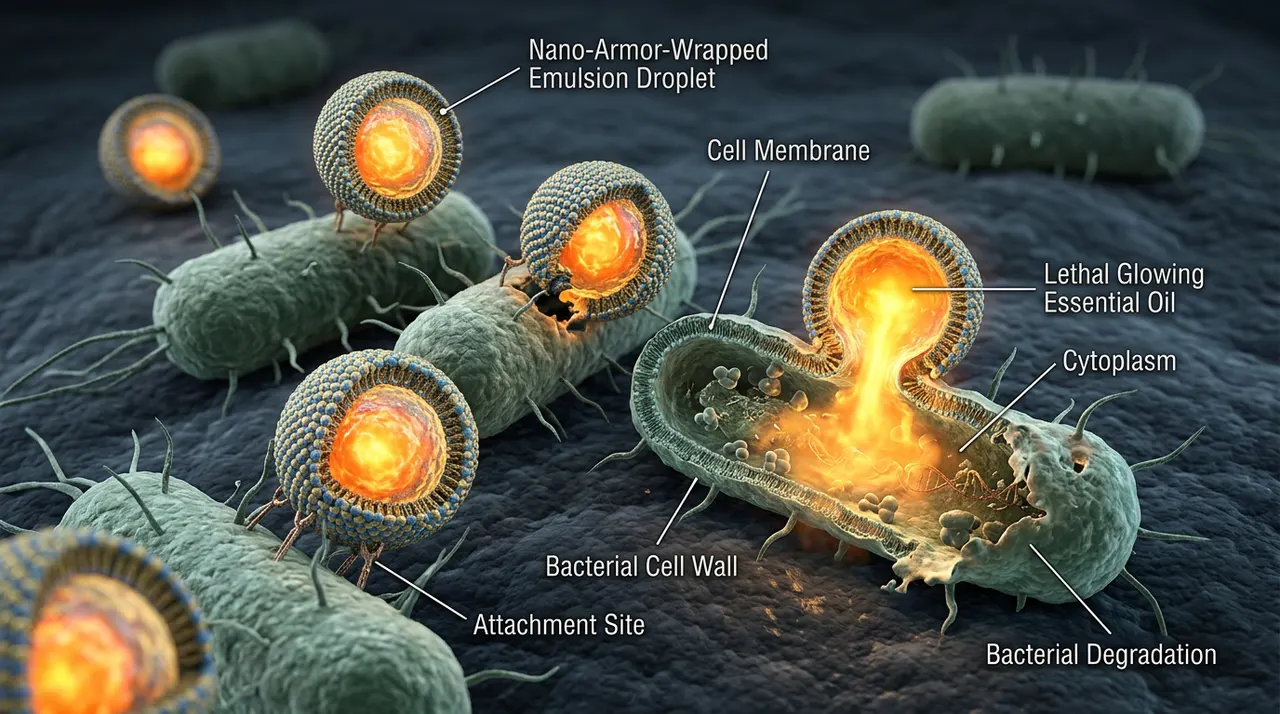
The Future of Green Packaging
This revolutionary research found a perfect path of "green armament" for highly volatile, water-insoluble plant essential oils.
Using nature's most abundant renewable resource (cellulose) to encapsulate natural sterilizing essential oils completely abandons chemically synthesized surfactants. This Pickering emulsion, with its high stability and high antibacterial activity, has extreme potential to become a superstar in the future fields of food preservation packaging, high-end green cosmetics, and even novel natural antibiotics.
Reference PDF for study; cite the published version.