
Science
In the Dark Room of Splitting Headaches, How Do Essential Oils Press the "Neural Pause Button"?
A migraine is not just a lack of sleep; it is a neurovascular storm. Modern research reveals that nature's aromatic molecules can reach the central nervous system to gently calm this storm.

When a migraine strikes, the world suddenly shrinks into a dark room where all the curtains must be drawn. Even the most ordinary light or subtle sound transforms into a rhythmic, violent throbbing inside the brain. Anyone who has experienced it knows that this is not just "lack of sleep," but a micro-storm that inflicts severe physiological and psychological torment.
Modern medicine tells us that migraines are a primary neurovascular dysfunction. It involves abnormal constriction and dilation of blood vessels, as well as the eruption of neurogenic inflammation. To calm this storm, we often have to swallow potent painkillers or triptans. However, this is frequently accompanied by concerns about side effects and the frustration of drug resistance. When facing this deep neural throbbing, must we rely solely on harsh chemical blocks?

A heavyweight review in the *Journal of Ethnopharmacology* turns its gaze to the ancient and gentle practice of aromatherapy. Researchers systematically sorted out the deep mechanisms of aromatic plant essential oils in combating migraines, revealing that behind those comfortable and pleasant scents hide extremely precise pharmacological actions.
When we inhale specific plant essential oils (such as lavender, peppermint, etc.), those tiny volatile molecules can quickly travel through the nasal mucosa and olfactory nerves deep into the brain. They do not merely "distract attention"; they solidly participate in mediating neural signals.
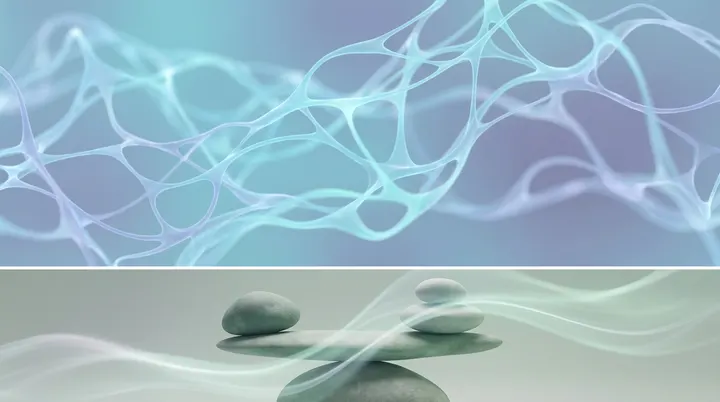
Studies have shown that the monomer components in these essential oils can effectively inhibit the neurogenic inflammation that triggers headaches and reduce the central nervous system's sensitivity to pain (hyperalgesia). Moreover, they ingeniously balance the vasorelaxation state, preventing the throbbing pain caused by excessive vasodilation. They act like a flexible comb, gently untangling the tense, disordered neurovascular fibers in the brain.

Compared to the "single-point strong attack" of traditional drugs, aromatherapy is more like a "global soothing." It not only physiologically blocks the spread of pain but also psychologically dissolves the anxiety and panic brought on by severe pain. For many migraine sufferers, this natural, comfortable, and fast-acting therapy is undoubtedly a gentle touch of light in the darkness.
Of course, essential oils cannot entirely replace standard medical treatment for severe migraines. However, they offer a highly potential auxiliary and daily intervention method. In this fast-paced, high-pressure era, when we are forced into the dark room by a migraine again, besides enduring, we can also light a wisp of fragrance, letting nature's airy molecules gently press the pause button for our overloaded nerves.

——
References & Literature
The core mechanisms discussed in this article are derived from: Yuan R, Zhang D, Yang J, et al. *Review of aromatherapy essential oils and their mechanism of action against migraines* [J]. Journal of Ethnopharmacology, 2021, 265: 113326. (For specific pages and citations, please refer to the official publication).
Reference PDF for study; cite the published version.
*Note: This article is for science communication purposes, aiming to share cutting-edge research perspectives. It does not constitute clinical medical advice. If you experience severe or persistent migraines, please be sure to visit a formal medical institution's neurology department.*