
Science
Behind the Romance of Lavender: How a Touch of Purple Becomes a "Natural Sedative" for Modern Nerves
In an era where anxiety is background noise, lavender is far more than a romantic perfume label. Its volatile components serve as a severely underestimated "natural sedative".

When you think of lavender, what image first comes to mind? Is it the endless purple fields of Provence, or a bottle of perfume bearing a romantic label?
In a time when anxiety has almost become the background noise of our era, we are accustomed to sustaining our lives with caffeine and forcing sleep with melatonin. Our bodies are like rubber bands stretched from both ends. Lavender, a plant seemingly only responsible for "providing romance," is actually a severely underestimated "natural sedative."

A comprehensive review recently published in *Chinese Traditional Patent Medicine* detailed the scientific code behind this touch of purple. Researchers found that lavender essential oil is extremely rich in linalool and linalyl acetate. When you take a deep breath and inhale these odor molecules, they don't just linger on the sensory surface; they send a direct command to your central nervous system: "All is safe, you can relax."
Modern pharmacology has confirmed that these volatile components can effectively regulate neurotransmitters in the brain. They act like a gentle, heavy blanket covering over-excited nerve cells, thereby significantly reducing anxiety, and showing considerable potential in improving sleep quality and combating mild depression.

Beyond soothing emotions, lavender essential oil is also an excellent "firefighting squad." Whether it is a minor skin inflammation or the free radicals accumulated in the body due to stress, it can perform a gentle cleanup relying on its outstanding antioxidant, anti-inflammatory, and antibacterial capabilities.
Interestingly, in studies involving the elderly, lavender essential oil has even shown potential in combating cognitive decline (anti-dementia). This compels us to re-examine this plant: it is not just an emotional pacifier for the young, but can also be a gentle companion guarding the clarity of the brain over the long river of time.
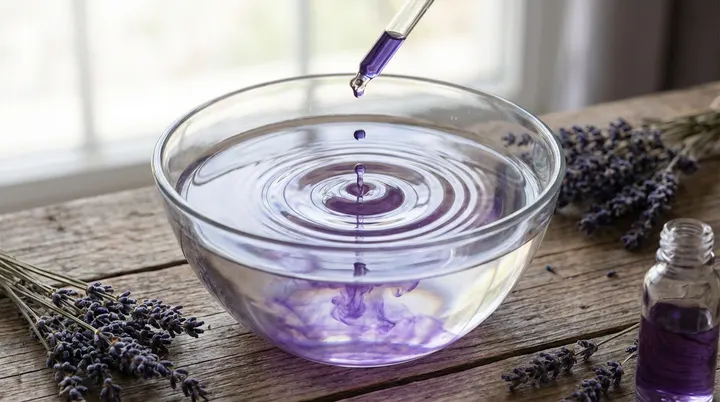
Of course, we still must draw scientific boundaries. Lavender essential oil cannot replace medical treatment for severe depression or severe insomnia, and excessively high concentrations may cause respiratory or skin discomfort in a minority of people. It is not a strong medicine, but a highly inclusive lifestyle intervention.
In an era that demands efficiency and asks us to "stay alert" at all times, lavender uses its unique way to tell us: moderate relaxation is not laziness. If you still find your brain spinning tonight, making it hard to fall asleep, try putting a drop of lavender essential oil near your pillow. Let that purple fragrance accompany you as you slowly sink into a dream where no defenses are needed.

——
References & Literature
The core mechanisms discussed in this article are derived from: Ou Wen, Zhang Haiyan, Wang Zhenchao, et al. *Research progress on chemical composition and pharmacological action of lavender essential oil* [J]. Chinese Traditional Patent Medicine, 2022, 44(1): 170-176. (For specific pages and citations, please refer to the official publication).
Reference PDF for study; cite the published version.
*Note: This article is for science communication purposes, aiming to share cutting-edge research perspectives on aromatic plants. It does not constitute clinical medical advice. If you experience severe insomnia or mood disorders, please be sure to visit a formal medical institution.*