
Science
The Moment You Put Down Painkillers: How Plant Aromatic Molecules Melt the "Ice of Pain" in Your Body
The side effects of long-term reliance on painkillers are worrying. Modern research confirms that aromatic TCM essential oils not only offer high-penetration anti-inflammation but also reach the emotional center through smell, breaking the chains of pain both psychologically and physiologically.

Physical pain is the hardest bill to understand. Whether it's a toothache, a migraine, or unspeakable chronic nerve pain, it brutally robs us of our focus, our mood, and our quality of life.
Faced with pain, modern people's most direct response is to swallow a painkiller, trying to quickly cut off the nerve's alarm signal. However, the mechanisms of pain are far more complex than we imagine. Long-term reliance on non-steroidal anti-inflammatory drugs (NSAIDs) often comes with irreversible damage to gastrointestinal and hepatic/renal functions. When the side effects of chemical drugs become a new burden, where else can we look for a safe exit to alleviate suffering?

A systematic study in the *Chinese Journal of Experimental Traditional Medical Formulae* points the key to this problem toward TCM aromatherapy. Researchers point out that essential oil molecules extracted from aromatic herbs like Sichuan peppercorn, bergamot, clove, and Angelica dahurica are born "masters of penetration" against pain.
Compared to other drugs, essential oils have extremely high permeability. They don't need to go through the long and tortuous absorption of the digestive tract; instead, they can directly penetrate the skin barrier or instantly reach the brain via the olfactory nerves. Once inside the body, these odor molecules display a multi-dimensional wisdom for pain relief.

First, they excel at putting out local "fires." Many essential oil components can directly inhibit the release of inflammatory factors, eliminating redness, swelling, and heat pain. Second, they are masterful emotional soothers. The olfactory area is closely connected to the limbic system, which manages emotions in the brain. Essential oil molecules can prompt the brain to secrete neurotransmitters like β-endorphin and serotonin, which make us feel joyful and relaxed, fundamentally lowering the central nervous system's sensitivity to pain.
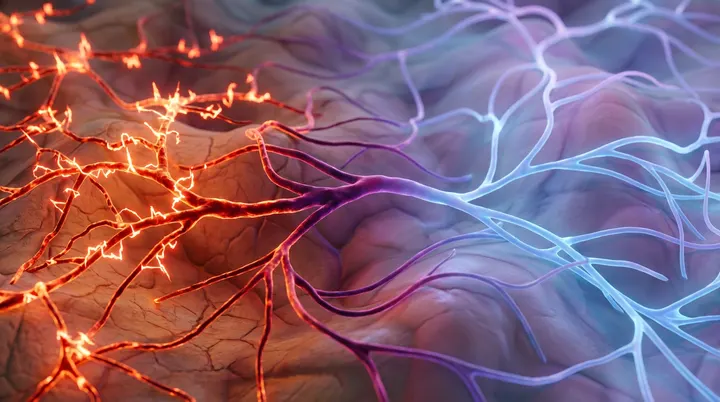
This means that aromatherapy's pain relief is not just physically cutting off the sensation of pain, but also an unbinding on a psychological level. It pulls you, backed into a corner and anxious from pain, back into a relaxed, safe sensory environment.
"Where there is no flow, there is pain; where there is flow, there is no pain." The ancient philosophy of TCM is perfectly validated in the microscopic world of modern essential oils. It is precisely by regulating Qi, opening meridians, and activating blood to resolve stasis that aromatic molecules get the stagnant energy inside the body flowing again.

When severe pain strikes or chronic pain leaves you exhausted, besides taking medication as prescribed, try gently applying a little blended TCM essential oil to the affected area or lighting an aromatherapy lamp. In slow, deep breaths, let nature's aroma flow like water, bit by bit melting the stiffness and stinging within the body.
——
References & Literature
The core mechanisms discussed in this article are derived from: Xu Pan, Shen Qian, Yang Ming, et al. *Research Progress on Pain Relief of Essential Oils of Traditional Chinese Medicine: A Review* [J]. Chinese Journal of Experimental Traditional Medical Formulae, 2021, 27(17): 211-216. (For specific pages and citations, please refer to the official publication).
Reference PDF for study; cite the published version.
*Note: This article is for science communication purposes, aiming to share cutting-edge research perspectives on aromatherapy. It does not constitute clinical medical advice. If you experience acute severe pain or long-term chronic pain, please be sure to visit a formal medical institution to investigate the cause.*