
Research News
Taming the "Natural" Wildness: Unveiling Clinical Risk Control of TCM Essential Oils
Essential oils are double-edged swords, highly effective but accompanied by high volatility and strong irritation. Explore how modern medicine transforms the wildness of essential oils into a safe healing power through formulation innovation and quality control.

In the minds of many, plant essential oils are synonymous with being "100% natural and free of side effects." However, in the context of rigorous clinical medicine, essential oils are an absolute double-edged sword. While they contain powerful anti-inflammatory, antibacterial, and anti-aging energy, their extremely high concentration and complex composition hide risks that cannot be ignored.
The most prominent characteristics of essential oils are their "high volatility" and "strong irritation." If you have ever accidentally applied undiluted essential oil directly to your skin, you might have immediately felt a burning sensation, redness, or even peeling. This is the untamed "wildness" of essential oils.
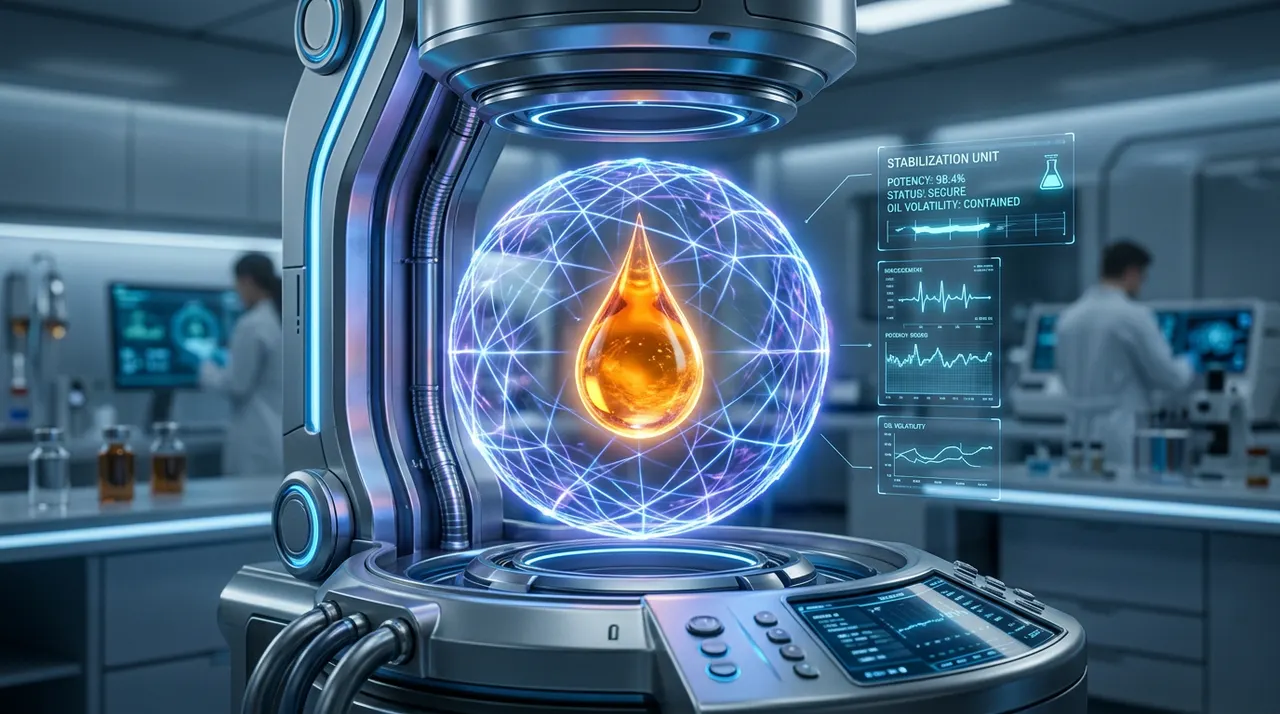
In clinical applications, the biggest challenge facing doctors and pharmacological experts is how to transform this "wildness" into a safe, controllable therapeutic force. The first step in risk control is strict "identity verification and quality control" of the essential oils. Differences in the growing environment, harvesting season, and even extraction techniques can cause huge variations in the chemical composition of essential oils bearing the same name. Without establishing precise quality profiles (such as fingerprinting technology), it is like using mystery box drugs, unable to guarantee the safety and stability of each treatment.
Beyond source control, the key lies in the "innovation of administration routes and dosage forms." To reduce irritation and delay evaporation, scientists use modern formulation technologies to put various "straitjackets" on essential oils. For instance, using microencapsulation or cyclodextrin inclusion technology to "lock" the volatile essential oil molecules into tiny capsules, or turning them into nanoemulsions. This not only significantly reduces direct irritation to the skin and mucous membranes but also allows the therapeutic effects to be released slowly and persistently.

In hospital aromatherapy practices, there are extremely strict regulations on the concentration of essential oils (they usually need to be diluted with carrier oils to below 1%-5%). At the same time, a comprehensive adverse reaction monitoring mechanism is established in clinical settings. From allergy testing before medication to close observation during the treatment, every step ensures this natural power is used safely.
"Natural" is by no means equal to "absolutely safe." The clinical application of TCM essential oils is precisely a process in which humans use modern technology and rigorous medical attitudes to "tame" and rationally utilize the gifts of nature. Only within a scientific risk control framework can essential oils truly shed their wildness and become a good medicine for healing the body and mind.
Reference PDF for study; cite the published version.
> Reference: > XING Li-yuan, LI Hui-ting, WAN Na, et al. Analysis on risk control of traditional Chinese medicine essential oil in clinical application[J]. Chinese Traditional and Herbal Drugs, 2021, 52(8): 2458-2464.