
popular-science
Breaking the "Rhizome-Supremacy" Bias: The Scientific Breakthrough of Using Fresh Acorus Tatarinowii and Its Leaves in Medicine
Acorus tatarinowii has long been restricted to using only dried rhizomes as medicine, with leaves discarded as waste. Modern chromatographic analysis overturns this stereotype: fresh grass and dried leaves are equally rich in the core orifice-opening component, asarone!

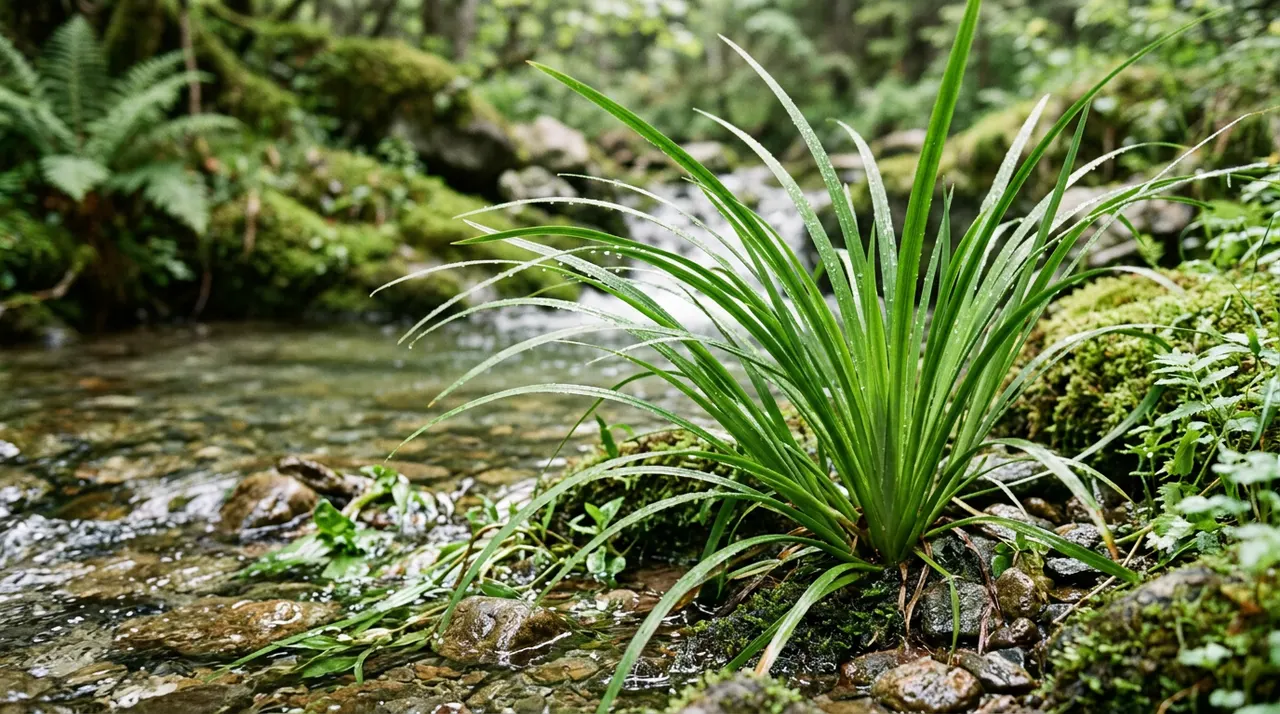
Acorus tatarinowii (Shichangpu) is a plant that frequently grows in the crevices of water stones in mountain streams. Its unique and strong pungent aroma is an excellent weapon used in TCM to "resolve dampness and open the stomach, open orifices and expel phlegm, awaken the mind and boost intelligence."
In the 2015 edition of the Chinese Pharmacopoeia, the legal medicinal part of Acorus tatarinowii is strictly limited to the "dried rhizome." This means that every harvest season, a massive amount of Acorus leaves are discarded as waste. At the same time, the emergency folk remedies using "fresh Acorus" recorded in ancient books seem to lack the support of modern standards. To break these biases, researchers decided to use data to vindicate the "leaves" and "fresh use" of Acorus tatarinowii.
Direct Confrontation Between Fresh and Dried Herbs
The researchers first pitted the "fresh product" against the "dried product" of Acorus. They extracted the volatile oils from fresh and baked Acorus rhizomes separately.
Experiments proved that the traditional drying process indeed causes a loss of aromatic substances. The total content of volatile oil in baked Acorus decreased significantly. However, when using High-Performance Liquid Chromatography (HPLC) to focus on the core pharmacological components of Acorus—α-asarone and β-asarone (both substances have been proven to have powerful anticonvulsant and sedative effects)—the results were surprisingly delightful: the difference in the mass fraction of these two core active components between fresh and dried herbs is actually very small.
This means that whether it is the "fresh juice extraction" preferred by the ancients or the "dried herb decoction" in modern pharmacies, there is a solid guarantee of the core efficacy substances.
The "Counterattack" of the Leaves: A Treasure Not to be Discarded
The most exciting discovery of this study is the re-evaluation of Acorus leaves.
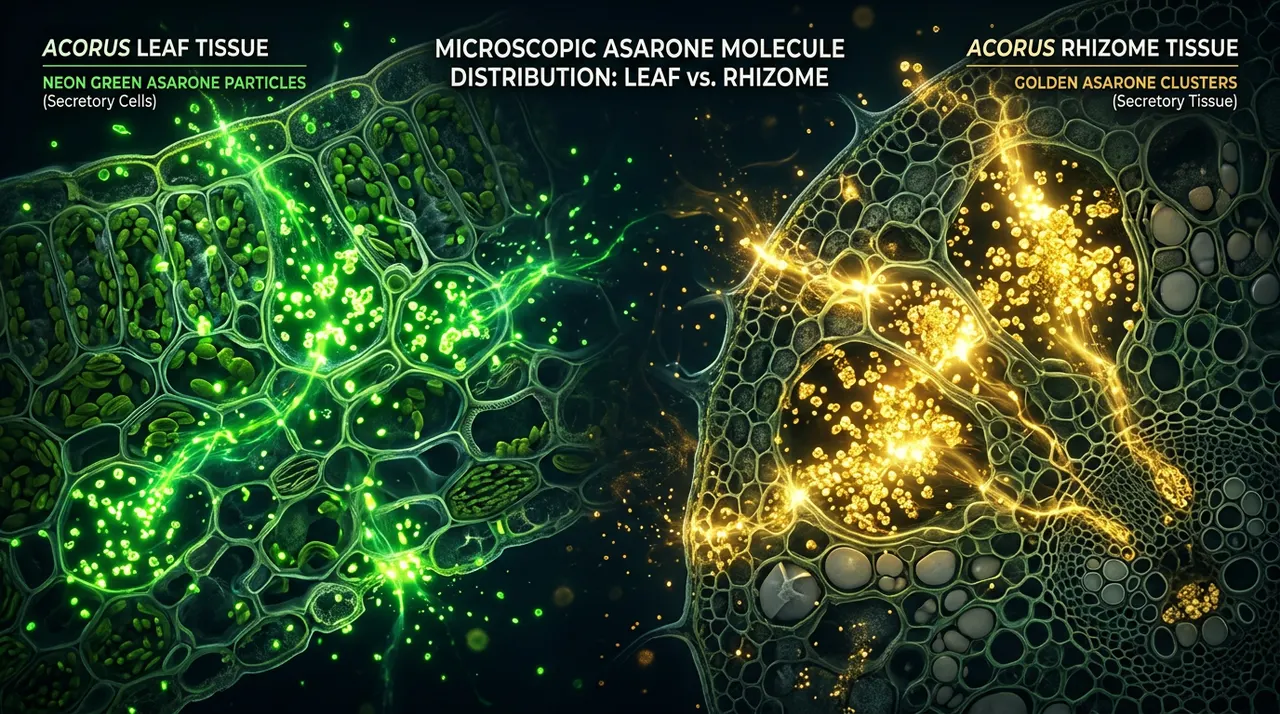
For a long time, people believed that only the rhizomes buried deep underground and accumulating nutrients had medicinal value. However, the HPLC test results were like a resounding slap in the face: Acorus leaves also contain substantial amounts of α-asarone and β-asarone!
The data showed that although the asarone content in the leaves (β-asarone in fresh leaves is 0.90%) is lower than that in the rhizome (2.81% in fresh rhizome), it is absolutely not useless waste grass. Considering that in an Acorus plant, the lush leaves account for a huge proportion of the entire plant's weight, if all these leaves were collected, the total medicinal value they contain would be an extremely massive figure.
Embracing the Green Future of "Whole Plant Medicine"
This precise content analysis has opened the door to the comprehensive utilization of Acorus tatarinowii herbal resources.
It scientifically confirms that Acorus leaves also contain the material code for "opening orifices and awakening the mind." If we can promote the transformation of Acorus from "single rhizome medicine" to "whole plant medicine" in future clinical practice and pharmacopoeia revisions, it will not only greatly alleviate the pressure of wild resource excavation but also be the most perfect tribute to this spiritual waterside grass gifted by nature.
Reference PDF for study; cite the published version.