
cultural
Culinary Alchemy: Traditional Chinese Medicine Spices on the Tip of the Tongue
Discover the ancient TCM wisdom hidden in your kitchen cabinet. From aged tangerine peel to the cold-dispelling fish soup with mint and fennel.

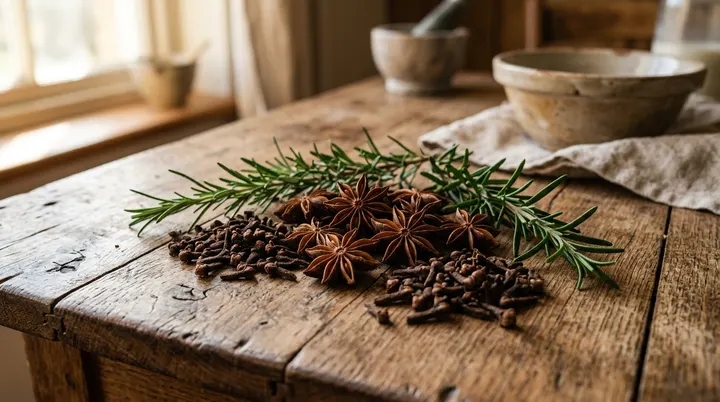
In China, the idea that food and medicine share the same source runs deep. When we open an ordinary kitchen cabinet, those jars are not merely seasonings—they carry millennia of traditional medicine insight. Star anise, fennel, cassia, ginger: these familiar "big spices" are quietly powerful botanicals.
Today, let us sit down to a "big spice banquet" and taste the herbal wisdom on the tip of the tongue.

A gift of time: the mellow aroma of chenpi
Among kitchen aromatics, chenpi (dried tangerine peel) can look like humble "old bark," yet connoisseurs often treasure it like an heirloom. The word *chen* ("aged") is its soul. Under the right temperature and humidity, and with long fermentation, tart peel sheds its green edge and gains depth—richer as the years pass. In Xinhui, Guangdong, some families keep peel aged for decades, valued far beyond everyday spice.
In traditional medicine, chenpi is a key herb to regulate *qi* and strengthen the Spleen and Stomach. It chiefly moves middle-jiao *qi*; when the middle burner flows, fluid metabolism follows. In hot, humid southern seasons when appetite flags, a dish such as "duck with aged chenpi" uses its unmistakable aroma to wake the palate while easing the chest, regulating *qi*, and resolving turbid dampness.
A single dish can be a gentle formula. Time does not only deepen flavor—it can quietly support body and mind.
The warming logic in a pot of fish soup
Kitchen herbal wisdom shines in everyday pairings. At the first sign of wind-cold, many people reach not for a pill but for a bowl of hot soup. A classic "crucian carp with fresh aromatics" reads like a balanced warming prescription.
It blends ginger, mint, garlic, and fennel. Ginger, pungent and warm, vents the exterior and dispels cold-damp; mint disperses wind-heat and clears the head; fennel is aromatic, warms the interior, moves *qi*, and harmonizes the stomach; garlic was traditionally said to dispel cold-damp and ward off "yin evils."
Shredded ginger, cracked garlic, and rinsed fennel hit hot oil until fragrant; the fish is simmered to a milky broth; fresh mint leaves finish the bowl. First comes mint’s cool lift, then the bold marriage of ginger, garlic, and fennel, then the sweetness of the fish. A few bowls bring a light sweat; wind-cold loosens with the steam.

Balancing the cauldron: governing a great state like cooking a small fish
Thousands of years ago, Shen Nong tasted hundreds of herbs; our forebears first gathered these aromatic plants to ward off pestilence and support health. In time they walked from dispensary to kitchen and became inseparable from Chinese food culture.
These spices know no social rank: they grace lavish feasts and humble tables alike. In the clatter of pots and pans they quietly guard digestion and vitality. *Balancing the cauldron*—the height of cooking—echoes the therapeutic search for harmony. Next time you lift a star anise or a bay leaf, pause: you hold a thread of life wisdom that has run for millennia.