
cultural
The Millennium Beauty Code: Exploring the Natural Whitening Power of Chinese Herbs
Unveiling the scientific mechanisms behind traditional Chinese herbs like Scutellaria baicalensis and Polygonum cuspidatum in inhibiting tyrosinase and achieving natural skin whitening.

“Skin like curd, face like white jade”—fair, luminous tone has long been an Eastern aesthetic. Before synthesis, palace and village alike looked to fragrant Chinese herbs.
Today, as some synthetic brighteners worry users, gentle botanical extracts return—especially those that tame tyrosinase.
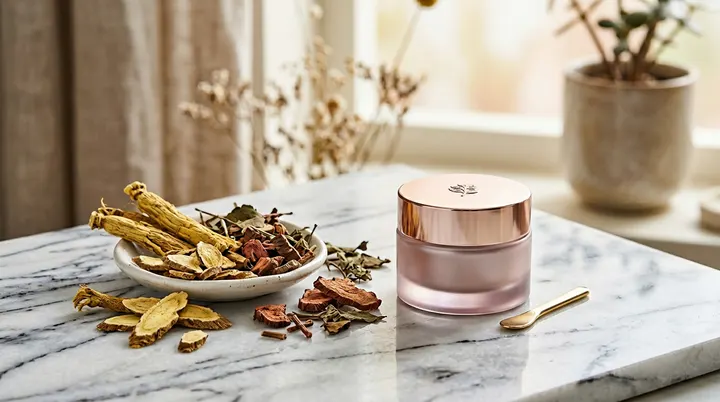
Melanin and tyrosinase
Pigment sits downstream of tyrosinase in melanocytes. UV and stress rev the enzyme; tyrosine becomes melanin; tone darkens or spots form.
Whitening R&D therefore hunts safe tyrosinase brakes—many classical herbs qualify.
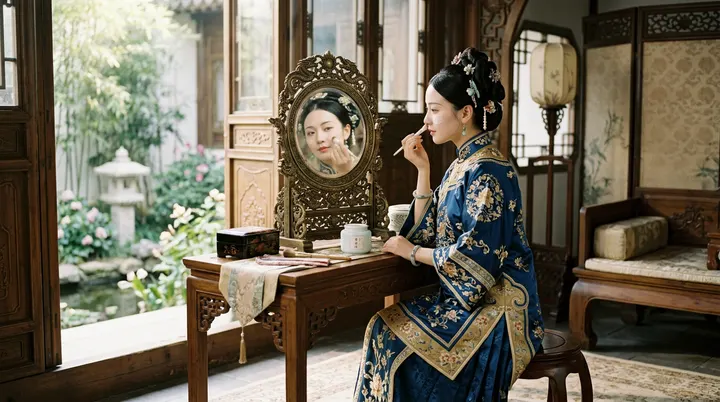
Scutellaria, knotweed, and burnet
Scutellaria baicalensis: baicalin can cut melanocyte proliferation and directly inhibit tyrosinase.
Japanese knotweed (Polygonum cuspidatum): resveratrol-rich extracts show strong inhibition—sometimes outperforming common benchmarks such as arbutin in lab models.
Sanguisorba (burnet root): tannins hit tyrosinase and reduce intracellular melanin with notable efficiency.
Mechanisms may be multi-target—not a single lock on one enzyme.
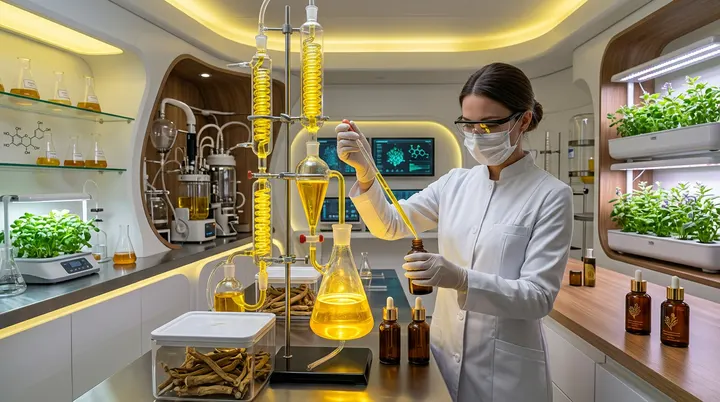
Old canon, new cells
When *Shen Nong’s Classic* meets cell biology, herbal whitening leaves anecdote for data.
Human panel tests with balanced Scutellaria–knotweed–burnet blends in cosmetic bases report lower melanin index after weeks—proof of cosmetic potential.
More desks now hold creams that honor Eastern materia medica through modern formulation. In a breath of herb scent, natural clarity wakes in the skin.