
cultural
Wearing Fragrance: Health and Peace in Traditional TCM Sachets
Exploring the cultural and medical significance of traditional Chinese herbal sachets for warding off mosquitoes, improving sleep, and preventing colds.

In Chinese tradition, a sachet in the palm holds poetry and folk craft. From *Songs of Chu*—“I tie autumn orchids as my sash ornament”—to rainbow pouches on children at Duanwu, wearing scent for protection runs back more than a millennium.
It is ornament—and a tradition of volatile aromatics for prevention.
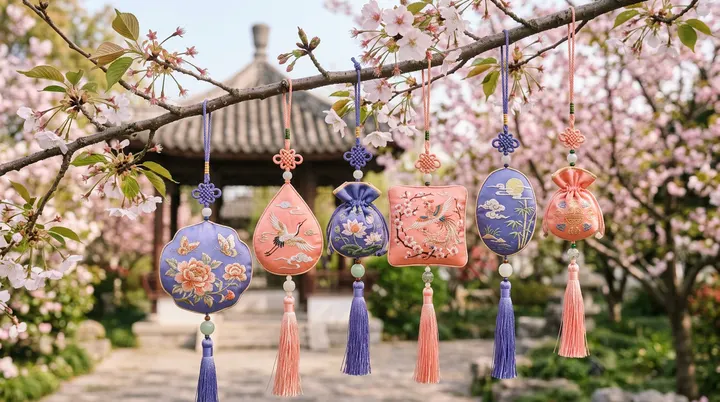
A fragrant shield: mosquitoes and more
Before industrial repellents, herb sachets were the trusted summer defense.
Mugwort, mint, patchouli, calamus, angelica dahurica, and other strong aromatics repel insects and awake the spleen, clear turbid air—“treat not yet ill” in concrete form.
Modern formulas vary by constitution: children get less acrid dispersion and more warming middle—e.g. cinnamon—to balance cold drinks in summer; adults may lean toward outward-expelling blends.
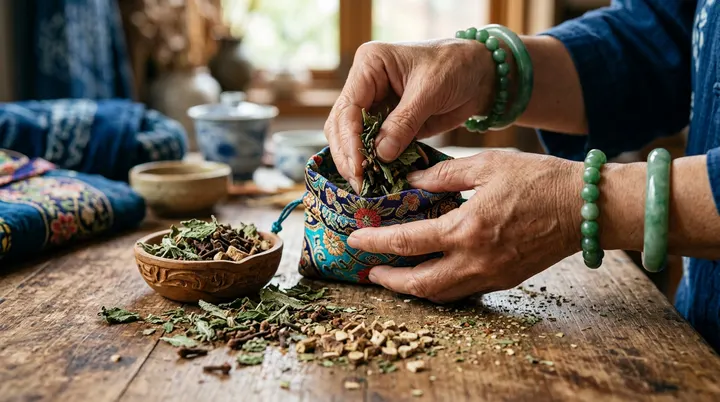
Four seasons: sleep and colds
Sachets do more than summer. For insomnia, calming aromatics—mint, white chrysanthemum, calamus with small amounts of camphor, amomum, clove, borneol—may hang bedside: mild scent eases tension.
In changeable weather, “cold-prevention” bags for adults might emphasize acrid, warm surface herbs; for children, gentler mugwort, perilla, patchouli, eupatorium. Worn at the chest, they are a soft barrier against wind, cold, and damp.
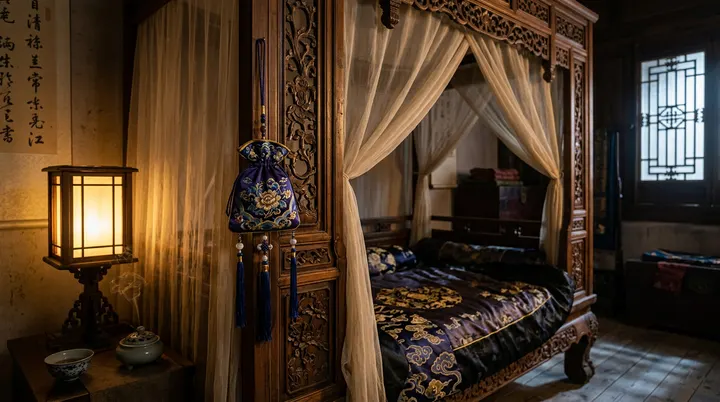
Gift of scent
Sewing a pouch and filling it with mugwort or a balanced powder is craft and blessing.
Caution: early pregnancy should avoid strongly moving, penetrating sachets; allergy-prone people may hang bags in-room rather than on skin.
One small bag holds a formula in miniature—folk “odor therapy” and respect for the seasons. In a fast age, a thread of herb scent can still walk with you, year-round.