
cultural
The Natural Defense in the Kitchen: The Antibacterial Wonders of Spice Plants
From cloves to star anise, discovering how ancient culinary spices serve as a natural defense against bacteria like E. coli, backed by modern science.

Through food history, spices did more than flavor. Before antibiotics, clove, star anise, and their kin were part of a natural line of defense—preserving food and calming foul air.
Science now re-reads that old kitchen wisdom.
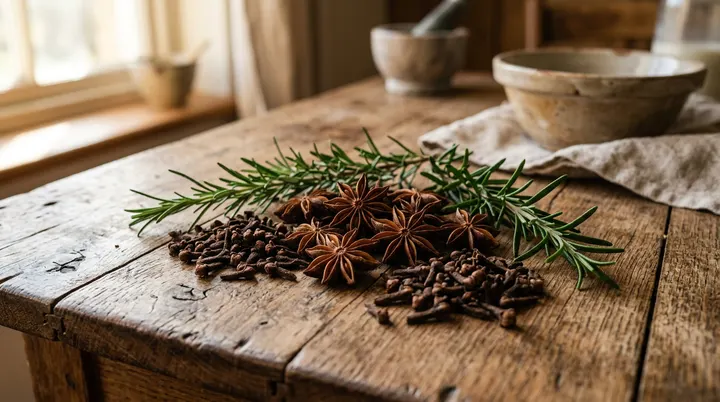
From experience to evidence
Chinese materia medica called many kitchen aromatics “warm the middle, scatter cold,” and “repel foul qi.” Clove-cinnamon preserves seemed to resist rot; during epidemics, burning eight-angle or rosemary “cleansed” rooms. Microbiology increasingly agrees.
Pathogenic *E. coli*—trouble in farms and human gut—grows harder to treat as antibiotics are overused. Plant extracts, diverse and often gentler on resistance, draw renewed attention.
Studies on clove, star anise, rosemary isolates, and active fractions find real antibacterial substance.
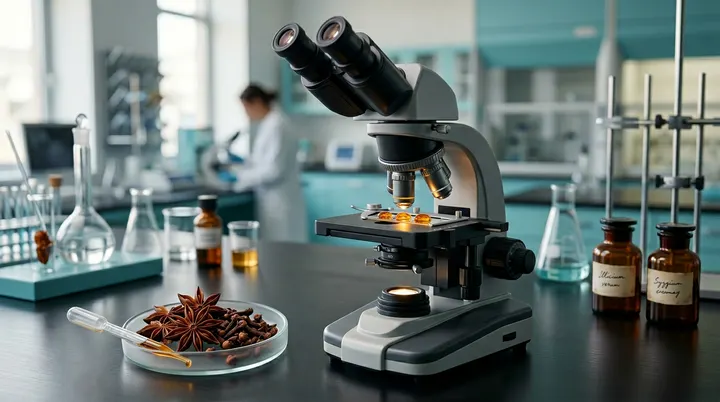
Essential oils at work
Clove oil, star-anise oil, rosemary oil, rosmarinic acid, carnosic acid—inhibition assays against *E. coli* can be striking. Clove oil often leads against standard lab strains; carnosic acid from rosemary can excel against tougher clinical isolates.
Eugenole in clove and volatile fractions in anise disrupt membranes and metabolism—evolution’s own chemical shields, now human tools against resistant germs.
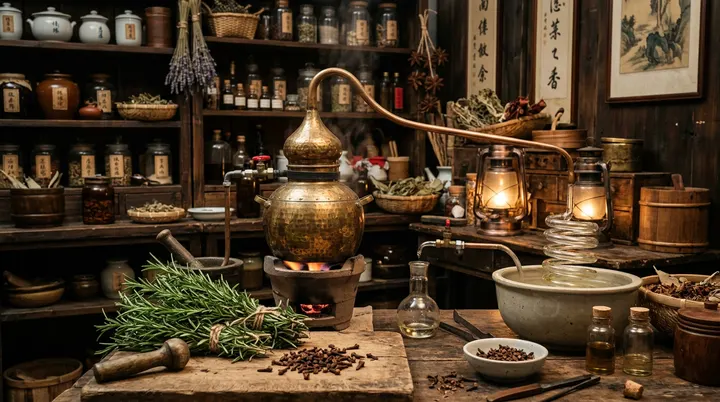
Table and farm
Food formulators explore clove and rosemary extracts as natural preservative partners; veterinary and feed research seeks infection control with less chain-wide antibiotic residue.
Tiny spices that perfume the wok also shore up a quiet, natural wall in the microbial world.