
popular-science
Retaining the Spicy Warmth: Finding the Golden Temperature and Thickness for Baking Dried Ginger
The efficacy of dried ginger mainly comes from 6-gingerol and volatile oil. Scientists discovered through orthogonal tests that slice thickness hugely impacts quality, finding the "golden drying formula" to maximize efficacy retention.

Dried ginger (Ganjiang), this old ginger covered in the wrinkles of time, is the main force in TCM for "warming the middle, dispelling cold, restoring Yang, and unblocking the vessels," and the soul of famous formulas like "Lizhong Decoction" and "Sini Decoction." Transforming fresh ginger into dried ginger is not as simple as merely sun-drying and dehydrating. If the temperature is too high or the slices are too thin, the core components responsible for generating heat and expelling cold will vanish into the air.
So, how exactly should it be baked to produce the most potent dried ginger? Researchers designed a rigorous "orthogonal test," much like studying a precision instrument, to find the golden rules for preparing dried ginger.
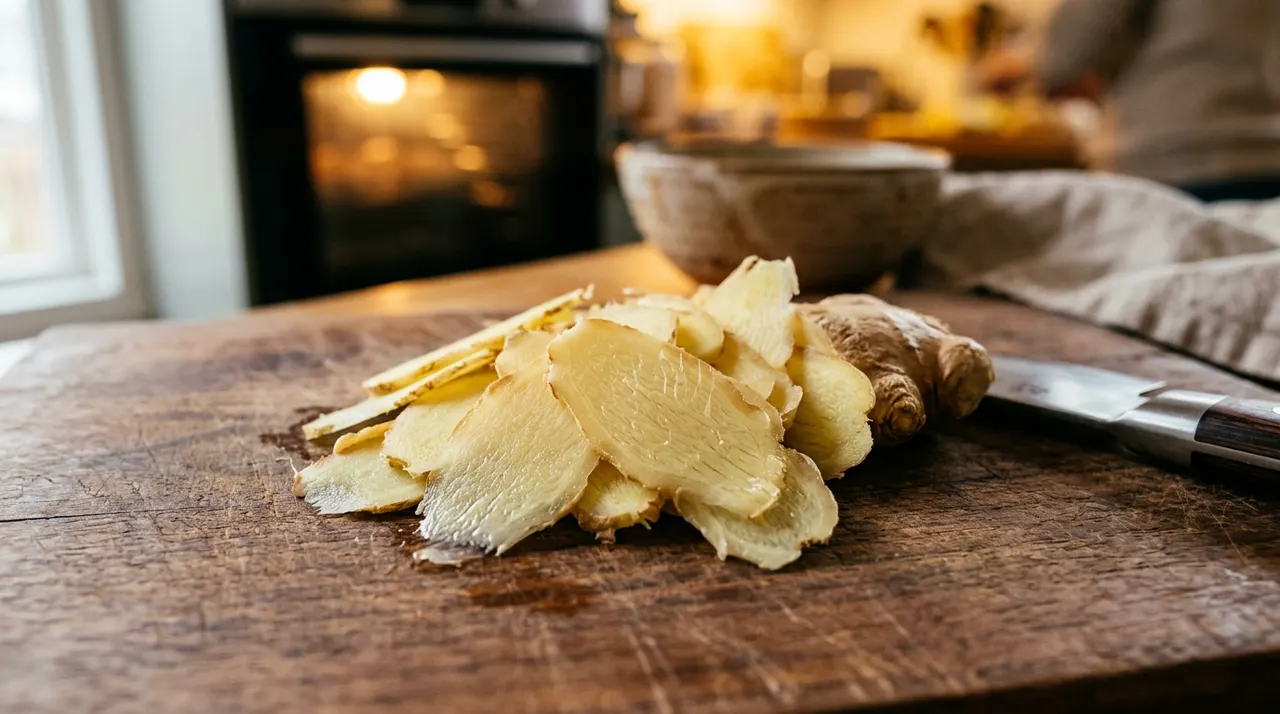
Locking Onto the Two Major Heat Sources: Gingerol and Volatile Oil
The reason dried ginger can make one's stomach feel warm and even cause full-body sweating after drinking is entirely due to its two secret weapons: 1. 6-Gingerol: Provides the spicy taste, can dilate blood vessels, and promote blood circulation. 2. Volatile Oil: Rich in aromatic substances, it can regulate Qi and resolve dampness.
During the drying process, these two substances are very delicate. If the temperature is too low, the fresh ginger rots and molds easily; if the temperature is too high, massive amounts of volatile oil escape, and 6-gingerol may decompose from the heat.
The Unexpected Determining Factor: Slice Specification
The researchers tested multiple combinations of three factors: "slice thickness," "drying temperature," and "drying time."
Through precise detection by liquid chromatography, the data revealed a counterintuitive conclusion: among these three conditions, the one with the greatest impact on the overall quality of dried ginger (6-gingerol + volatile oil content) was surprisingly not the baking temperature, but the thickness of the slice!
If cut too thin (0.2cm), it dries quickly, but the air contact area is too large, and the volatile oil runs completely out; if cut too thick (0.4cm), moisture is hard to evaporate, and internal deterioration occurs easily, leading to a drop in gingerol content.
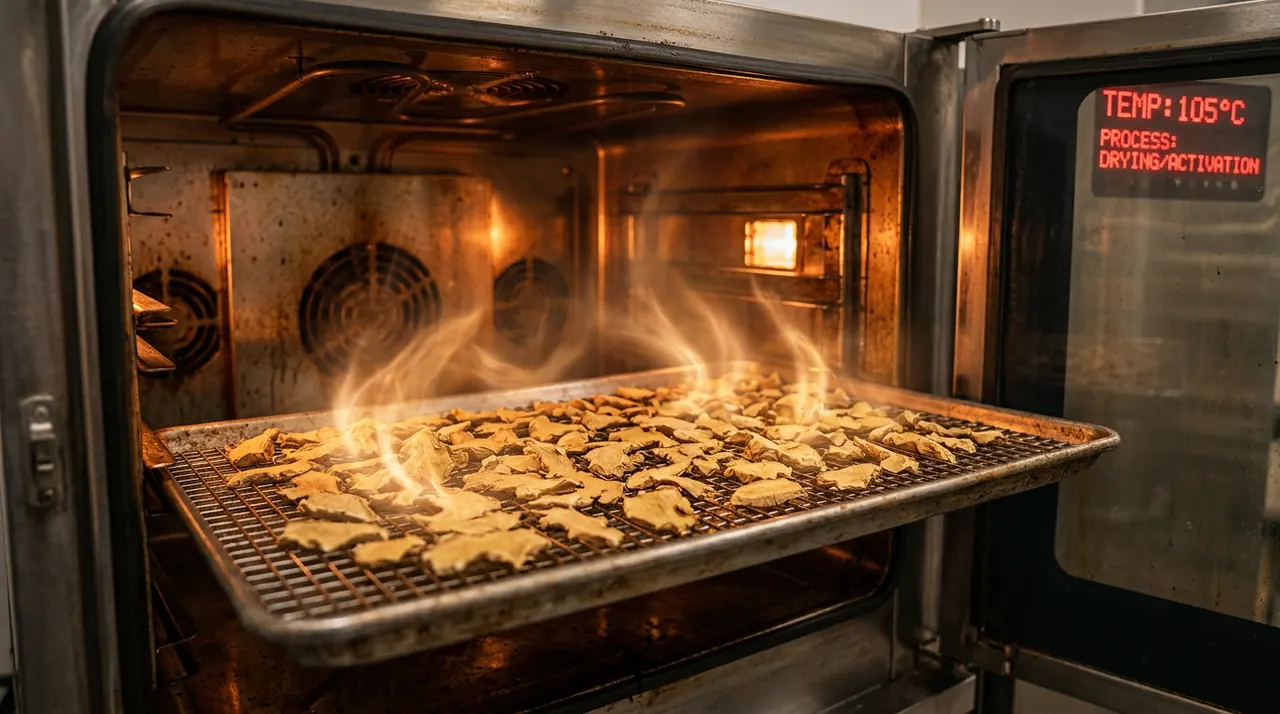
The Formula for the Most Perfect Dried Ginger
Through scientific statistical scoring, the "golden formula" for preparing dried ginger finally emerged: Cut the fresh ginger into a standard thickness of 0.3 cm, place it in an industrial oven, precisely set the temperature to 55°C, and continuously dry it for 18 hours.
Under these precise parameters, the dried ginger can completely remove its moisture while perfectly locking the 6-gingerol (mass fraction reaching 0.914%) and volatile oil (reaching 1.273%) within the plant fibers.
This research allows the processing of traditional herbs to bid farewell to the blind groping of "relying on experience and feel," using the power of data to guard the purest spicy warmth within this ancient rhizome.
Reference PDF for study; cite the published version.