
popular-science
The Hidden Fragrance of the "Tree of Life": Decoding the Volatile Oil Profile of Yunnan Moringa Leaves
Moringa, known as the "Tree of Life," is not only nutritious but its leaves also hold unique aromatic medicinal potential. Scientists comprehensively determined the volatile oil of Moringa leaves from five regions in Yunnan for the first time, uncovering its aroma code.

Moringa oleifera, native to India, is known as the "Tree of Life" because it thrives even under extremely arid conditions and every part of it is valuable. In recent years, Moringa leaves have set off a global health craze as a new resource food with extremely high nutritional value.
However, aside from the nutrition you eat, if you crush a Moringa leaf, you will smell a unique fresh plant fragrance. Does this aroma conceal undiscovered medicinal value? To answer this question, researchers turned their attention to Yunnan, the main introduction area of Moringa in China.
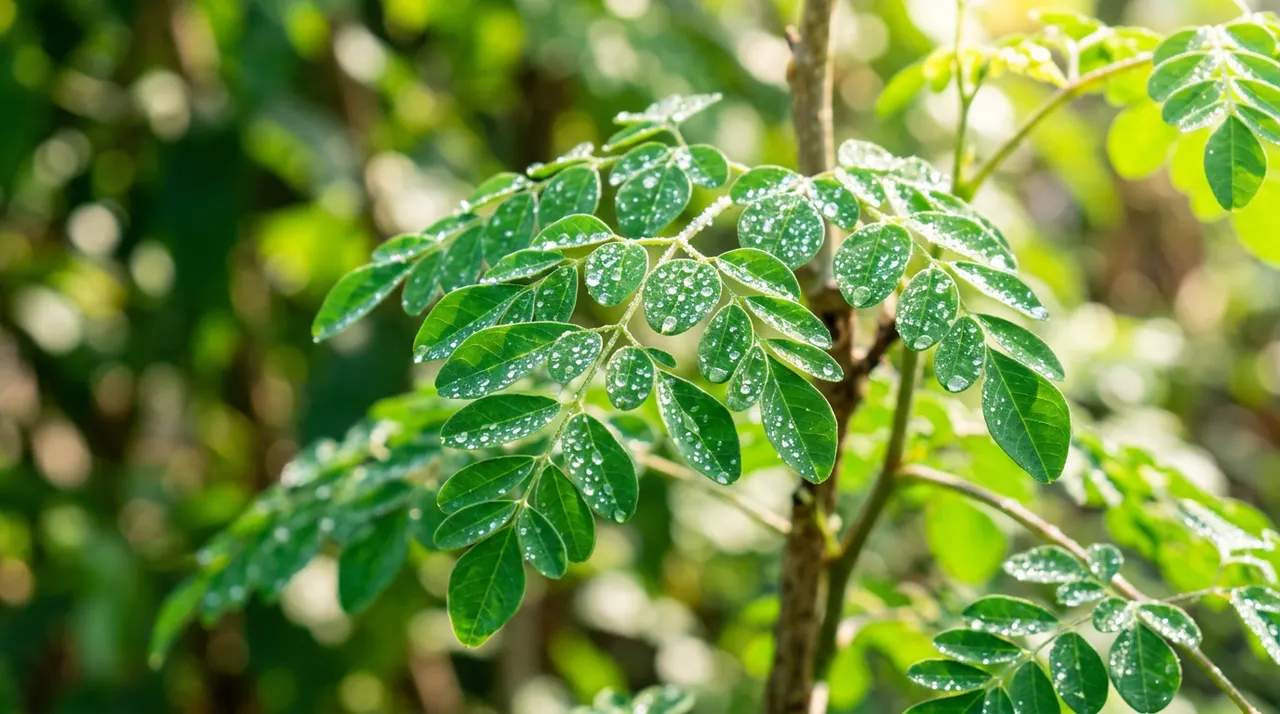
The First Exposure of the "Aroma List"
The research team collected fresh Moringa leaves from five different major producing areas in Yunnan (Pu'er, Xishuangbanna, Dehong, Lijiang, and Chuxiong). They extracted their volatile oils through steam distillation and analyzed the components using high-precision gas chromatography-mass spectrometry (GC-MS).
This was the academic community's first deep "census" of the volatile oil of Yunnan-grown Moringa leaves. The results showed that this aroma list contains a total of 31 clear chemical components. These components are like a large family, mainly composed of alicyclics, terpenes, aromatics, and nitrogen-containing heterocyclic compounds.
A Symphony of Plant Alkanes and Aromatic Alcohols
Among all the components, phytone (a ketone with a special aroma) and various long-chain alkanes (like tetracosane and pentacosane) occupied absolute dominance. These alicyclic substances not only form the thick, steady base aroma of Moringa leaves but often also possess certain antioxidant and antibacterial potentials.
In addition, terpenoid compounds like linalool were detected in the volatile oil. Linalool is the core component of many precious essential oils (like lavender essential oil) and has excellent nerve-soothing, anti-anxiety, and anti-inflammatory effects. This implies that Moringa leaves can not only be used as a functional food but also have great potential in aromatherapy and natural daily chemical products.

Origin Differences: The Gift of Terroir
Interestingly, although the Moringa leaves from the five regions in Yunnan were basically consistent in the types of volatile oil components, the relative content of the main components showed obvious differences.
For example, the phytone content in some origins was exceptionally prominent, while others had an advantage in specific aromatic hydrocarbons. This slight chemical difference is exactly the "terroir code" given to Moringa by the unique altitude, soil, climate, and sunshine duration of different areas in Yunnan. This not only proves Moringa's strong environmental adaptability but also provides a scientific basis for the "customized" procurement of Moringa raw materials based on different industrial needs in the future.
Reference PDF for study; cite the published version.