
Science
When Ancient Scents Wear "Nano-Armor": How Modern Tech Locks in Fading Natural Healing
Volatile molecules in essential oils are easily lost. When ancient herbal wisdom meets cutting-edge nanotechnology, we not only lock in the scent, but also unlock new possibilities for long-lasting, targeted natural therapies.

If we were to compare the "aromatic essential oils" in Traditional Chinese Medicine to a group of agile sprites, they are absolutely the hardest guests for nature to keep.
Whether it is the cooling peppermint, the fragrant patchouli, or the rich cinnamon, their magical powers to kill bacteria, reduce inflammation, and soothe nerves all come from highly volatile terpenes and phenylpropanoids. What does this mean? It means that as soon as these aromatic molecules encounter light, oxygen, or slightly higher temperatures, they vanish as quickly as morning dew, or degrade into inactive compounds.
This not only makes the "shelf life" of these medicines extremely short, but also renders many natural therapies that could have shined brightly somewhat powerless when facing the rigorous standards of modern medicine.
But the scientific community has not given up on these gifts from nature. In a comprehensive review published in *Chinese Traditional and Herbal Drugs*, researchers from Jiangxi University of Chinese Medicine showcased a fascinating collision of tradition and modernity—equipping these delicate essential oil molecules with "nano-armor."
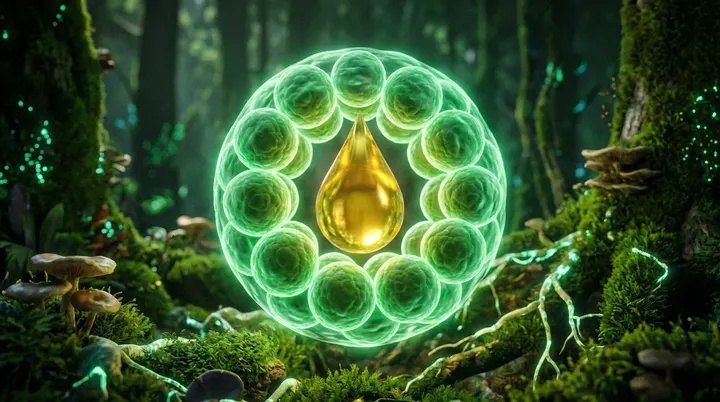
What is nanotechnology formulation? Imagine taking a highly volatile drop of essential oil and carefully encasing it in a microscopic capsule tens of thousands of times thinner than a human hair. The material of this capsule can be natural polymers (like chitosan or sodium alginate) or liposomes.

Once wearing this "nano-armor," the fate of the essential oil molecules is completely rewritten. First, they no longer fear external sunlight and oxygen; their stability is improved on an epic scale. Second, this armor comes with a "sustained-release" function, allowing the aroma and medicinal effects to be released steadily and continuously within the human body like a trickling stream, rather than burning out in an instant like a firework.
More interestingly, because nanoparticles are exceptionally tiny, they can more easily penetrate human cell membranes, and even cross the blood-brain barrier directly to the lesion. This sudden enhancement gives previously hard-to-absorb essential oils an incredibly high bioavailability.
This technological breakthrough is far more than just a victory in pharmaceutical laboratories. It means that in the near future, we will see more stable, longer-lasting natural antibacterial sprays, mood-soothing aromas, and even targeted essential oil drugs for specific inflammations in our daily lives.
When ancient herbal wisdom meets cutting-edge nanotechnology, we see an exciting future: science has not dispelled the romance of nature. Instead, with a deeper tenderness, it has firmly kept those fleeting healing powers right by our side.

——
References & Literature
The core mechanisms discussed in this article are derived from: Lai Huazhang, Chen Shuiyan, Zhou Weicheng, et al. *Research progress and thinking on nano technology for improving stability of essential oils from traditional Chinese medicine* [J]. Chinese Traditional and Herbal Drugs, 2022, 53(2): 641-652. (For specific pages and citations, please refer to the official publication).
Reference PDF for study; cite the published version.
*Note: This article is for science communication purposes, aiming to share cutting-edge research perspectives on new TCM formulations. It does not constitute clinical medical advice.*