
popular-science
The Three Realms of TCM Aroma Extraction: How Processes Change the Sterilizing Power of Forsythia and Mint?
Forsythia, Schizonepeta, and Mint in the famous TCM formula "Yinqiao San" are rich in antibacterial oils. Research compared three technologies like hydrodistillation and supercritical extraction, finding the method directly determines the oil's components and antibacterial power.

If you have ever had a wind-heat cold, you have certainly taken the famous "Yinqiao San" (Lonicera and Forsythia Powder) or its related preparations. The Forsythia (Lianqiao), Schizonepeta (Jingjie), and Mint (Bohe) in this formula are the famous Three Musketeers for "clearing heat and relieving the exterior." All three herbs are rich in volatile oils possessing powerful antibacterial and antiviral capabilities.
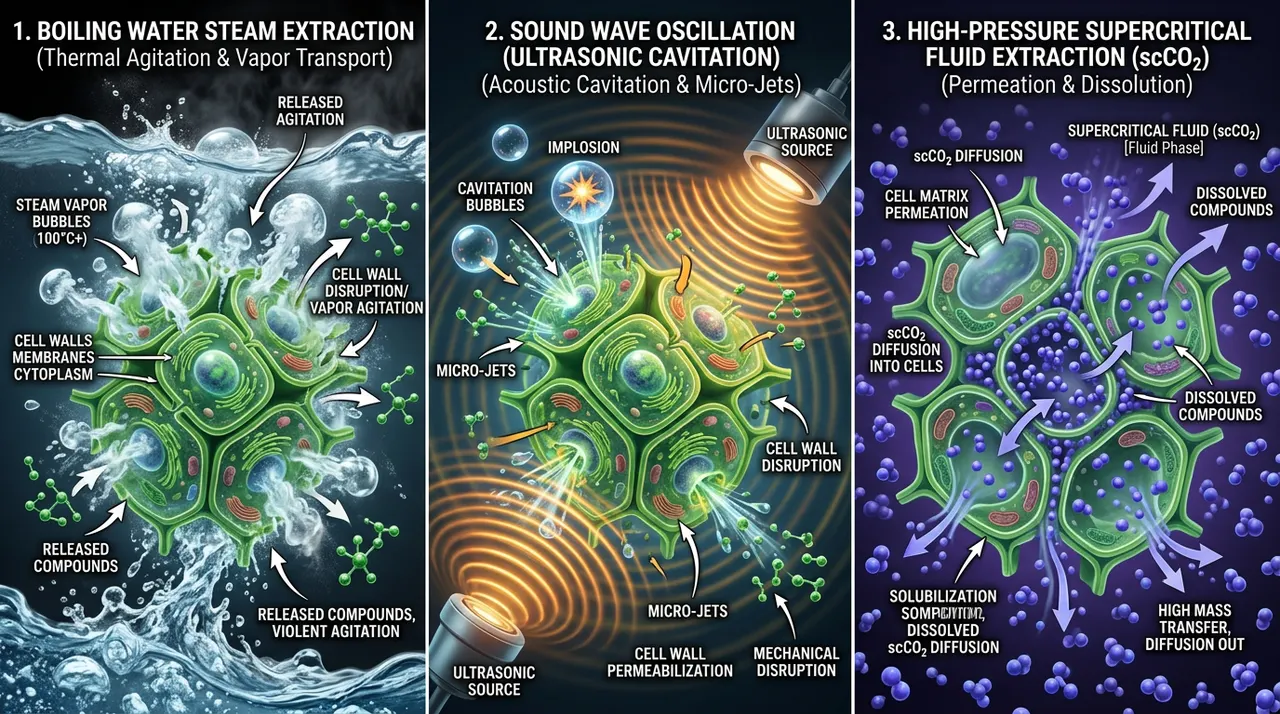
To force the essential oils out of these Three Musketeers, modern factories have various weapons. Currently, the three most mainstream are: the oldest Hydrodistillation (HD), Ultrasound-Assisted Hydrodistillation (UAHD) that shatters cells using sound waves, and the highly high-tech Supercritical Fluid Extraction (SFE) using CO2. Do these three different weapons produce the same essential oil?
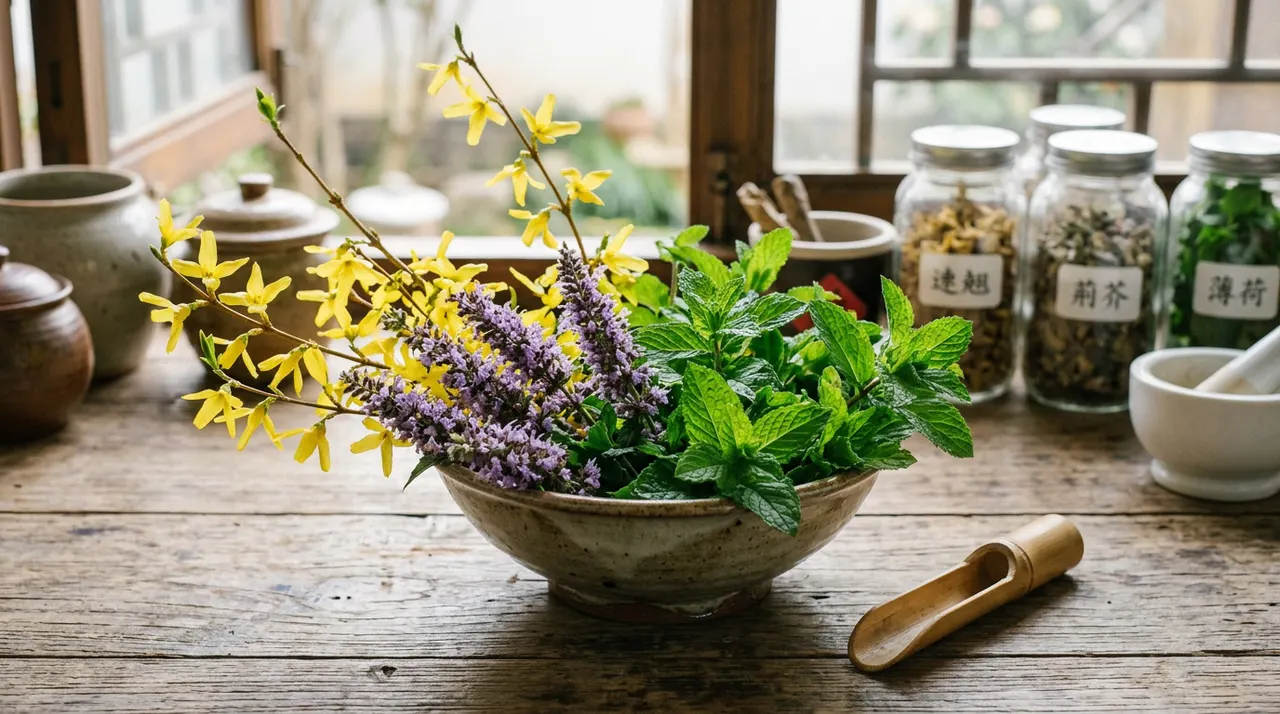
The Great Weaponry Competition of Extraction
Researchers mixed these three herbs in proportion, extracted the essential oils using these three methods separately, and conducted a deep "physical examination" via GC-MS.
- Hydrodistillation (HD): The standard, reliable old friend. In the essential oil it extracted, the menthol content (bringing the cooling sensation) was very high (35.81%), and having rolled through high-temperature boiling water, it produced some special floral ester substances, giving a relatively pure scent. - Ultrasound-Assisted (UAHD): The violent destroyer. Under the oscillation of sound waves, it extracted the most and most complex volatile oil components (49 types), even shaking out some macromolecular hydrocarbons from deep within the herbs. - Supercritical Extraction (SFE): The cool, detached assassin. Utilizing high-pressure liquid CO2 for low-temperature extraction, the active ingredients in the essential oil it extracts are extremely concentrated! The contents of "β-pinene," representing Forsythia's anti-inflammatory component, and "pulegone," Schizonepeta's core sterilizing component, far exceeded the first two methods.
Verifying Power on the Antibacterial Battlefield
The differences in components must ultimately be proven on the battlefield of killing bacteria.
Researchers used the extracted essential oils to combat common pathogenic bacteria like E. coli, Staphylococcus aureus, and Candida albicans. The results showed: the essential oil extracted by Supercritical Extraction (SFE), relying on its extremely concentrated active ingredients (especially the high content of pulegone), demonstrated the most formidable antibacterial firepower! It not only had the largest inhibition zones but also required the minimum bactericidal concentration.
Tailoring for Modern Pharmaceuticals
This research provides a clear line of thought for the production of modern TCM compound preparations.
If the goal is low equipment cost and pure aroma, traditional hydrodistillation remains reliable; if you want to squeeze out all substances from the herbs to the maximum, ultrasound assistance is a good helper; but if you are developing a potent, high-end preparation focusing on antibacterial and anti-inflammatory effects, then ignoring the cost and adopting low-temperature, high-pressure supercritical CO2 extraction technology will absolutely maximize the medicinal efficacy.
Reference PDF for study; cite the published version.