
cultural
Seeking Incense (Part 1): From Qin/Han Divine Smoke to Tang Dynasty Splendor
The royal use of incense began with sacrificing to gods and communicating with heaven. The Han Dynasty created the "Boshan Incense Burner", and the Tang Dynasty established the "Four Incenses" system.

Imperial incense use in China spans more than two millennia. Each shift reflects politics, religion, and taste. How did this “river of scent” begin?
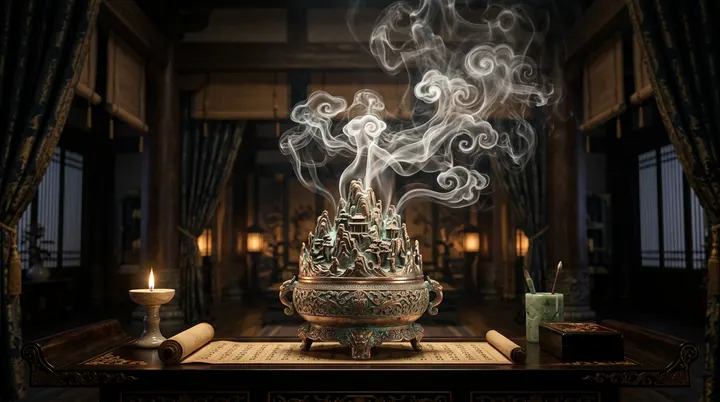
Emperor Wu and Boshan: incense as path to the divine
Under Qin and Han, spices chiefly served sacrifice and communion with heaven—heavily mystical. Emperor Wu of Han was a zealous patron. As the Silk Road opened, borneol, storax, and more arrived from the west; many could not burn on their own. Court artisans, inspired by legends of the immortal isles of Penglai, cast the famous Boshan incense burner.
A tray below held warming liquid; coals and aromatics sat above. Smoke threaded the mountain-shaped pierced lid like mist around sea peaks—Paradise brought into Weiyang Palace. Boshan censers crown Han bronze work and project the emperor’s wish to scent his way toward the gods.
Wei–Jin: from altar to salon
If Han incense was lofty and sacred, Wei, Jin, and the Northern and Southern Dynasties tinted it with worldliness and display.
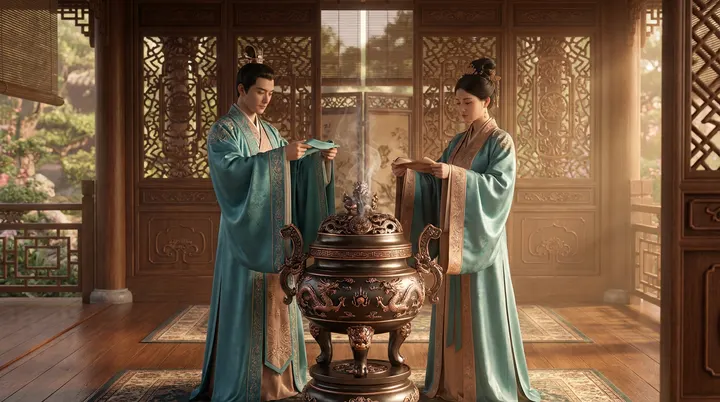
Spices moved from royal altars into literati daily life. Blended recipes multiplied; “fragrance for body and room” slid toward conspicuous consumption among elites. Fan Ye, author of the *Book of Later Han*, likened different aromatics to courtiers—proof that connoisseurship had reached a rare height.
Sui–Tang: the “four pillars” and splendid clouds
A unified empire and open borders brought imperial incense its golden age. The Tang fixed a framework of agarwood, sandalwood, ambergris, and musk—the spine of classical Chinese incense. Chang’an’s western market gathered the richest scents; Silk Road routes poured in exotic resins.
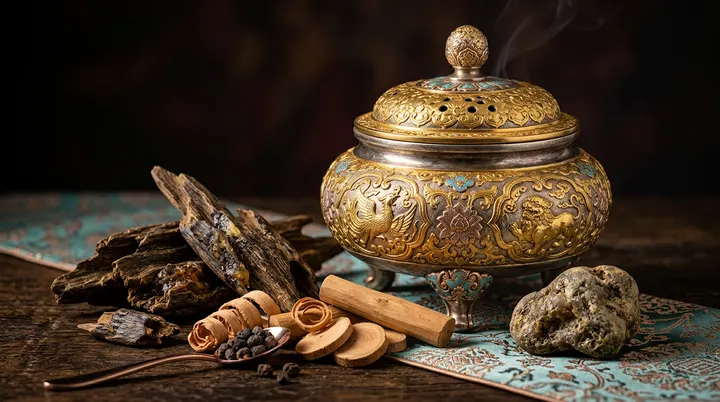
Tang taste favored bold, lingering fragrance—dense and opulent, like the gilded silver censers from Famen Temple’s crypt. Du Fu wrote of incense clinging to sleeves after court; Wang Wei of smoke curling near dragons’ robes. In Daming Palace, smoke was not mere freshening—it announced power and plenty.
From Qin–Han dreams of immortals to Tang’s triumphant clouds, royal incense finished its first evolution: from sacred smoke toward a grand language of wealth and rule. *(To be continued.)*