
cultural
The Magic of Hexiang: The Ancient Art of Blending Incense and Cultivation
Hexiang is not only the wonderful art of combining natural aromatics, but also an Eastern cultivation. Explore the mystery of ancient processing and feel the formless cultural imprint.

In the vast river of traditional Chinese culture, there is an art form that is both formless and real; it cannot be touched or seen, yet it can strike deep into the soul—this is the "affair of incense" (Xiangshi). And in this mysterious realm, "Hexiang" (blended incense) is undoubtedly the most fascinating chapter. If appreciating single agarwood is like listening to a melodious solo, then Hexiang is conducting a magnificent symphony.
Everything Can Become Incense: The Birth and Mystery of Hexiang
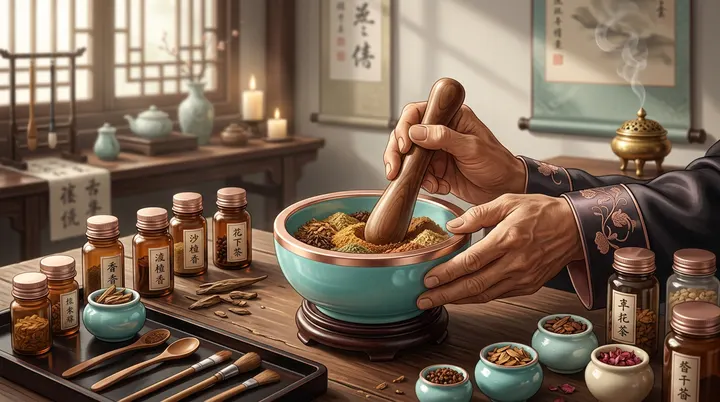
In the eyes of the ancients, although native natural aromatic herbs each have their unique scent matrix, they often fail to achieve a perfect realm due to insufficient content or a single scent profile. Thus, "Hexiang" came into being. It involves combining different natural aromatics according to extremely strict proportions and secret manufacturing processes, thereby creating ever-changing scents and efficacies.
The great Song Dynasty writer Huang Tingjian once called himself an "incense addict." He devoted his life to Hexiang, taking pleasure in blending scents that outsiders could not achieve. In fact, while precious agarwood is wonderful, its price is exorbitant. The reason ancient incense burning could enter millions of households was precisely due to the emergence of Hexiang. Through exquisite blending techniques, not only were the layers of scent greatly enriched, but the cost of use was also significantly reduced, allowing incense culture to be better inherited among the public.
Making the Seal Requires a Calm Mind: A Dialogue with Time
Appreciating incense begins from the very first second of "making the incense seal" (Dazhuan). This is not just preparation, but a meditation process to eliminate distractions.
Stir and mix the incense ash in the burner, level it with an ash press, and then gently place a hollowed-out "Shou" (longevity) character incense seal mold on top. Next, use an incense spoon to carefully fill the blended powder into the seal pattern, shovel away the excess, and finally tap the mold lightly to lift it, leaving the incense seal. The entire process requires movements as gentle as water. If the hand trembles even slightly, the powder scatters, and all previous efforts are wasted. This is an extremely meticulous and patient task; only with a calm body and a still mind can the seal be perfectly made.
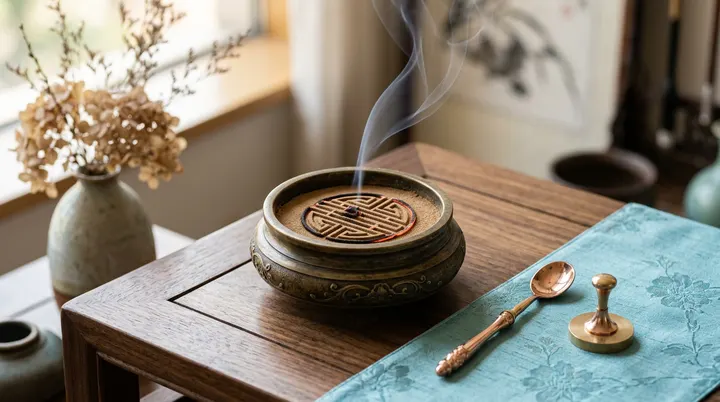
When a small piece of stick incense ignites the seal trace, sparks flicker, and curling blue smoke begins to spiral. Driven by the open flame, the fragrance pours out like flowing water. At this moment, time seems to freeze. That free and dynamic cloud of incense takes us across time and space to savor the unique calmness and composure of traditional Chinese culture.
The Magic of Processing: Turning Decay into Magic
The birth of an unparalleled incense relies not only on the recipe but also on the mysterious "processing" (Paozhi) techniques. Aromatic herbs must never be used directly before burning. Some need to be sliced and exposed to the sun, some require years of aging, and others must be soaked in special liquids.
For example, the inconspicuous "Jiaxiang" (operculum of a sea snail), if ground directly by an amateur, will only emit a fishy stench. But in the hands of an incense master, it needs to be combined with pure yellow mud, wine, wild honey, etc., simmered over low heat for three days and nights, and then baked and ground. Only through such complicated processing can Jiaxiang shed its fishiness and emit a faint, wide-ranging fragrance like the sea. Another example is the fresh rhizome of the French Iris, which has no scent; but after being stored in a cool place for two or three years, it miraculously develops a sweet, milky fragrance. Processing is using time and craftsmanship to strip aromatics of impurities, leaving only the purest soul.
Observing with the Nose, Participating with the Heart: Formless Cultural Imprint
Mr. Liu Liangyou once said that an incense gathering must avoid the word "vulgar." It is appropriate for four people to appreciate incense: alone is serene, two are excellent, three or four are interesting. This declares the independent and sober traditional style of incense culture.
Unlike tangible artworks such as calligraphy, paintings, or jade, incense is formless. Only through "observing with the nose and participating with the heart" (Biguan Xincan), letting the scent of incense enter the heart through the nose and permeate the whole body, can the shackles of the mind truly be unlocked. In the noisy modern city, we desperately need this artistic conception of "seeking stillness in motion." In your busy work, pause and make a pot of Hexiang. Let the refreshing herbal scent dispel fatigue, and the calming sandalwood smooth out anxiety. In this olfactory cultivation, we are not just smelling a scent, but reading a story of long years, continuing the inherited Chinese fragrance.